
close
Choose Your Site
Global
Social Media


Views: 0 Author: Site Editor Publish Time: 2026-08-23 Origin: Site


Engineering, Procurement, and Construction (EPC) contractors face massive risks managing corrosive fluid filtration systems daily. A single point of failure in chemical handling causes catastrophic project delays. The resulting liability can crush project margins instantly. Specifying the correct polymer during procurement solves only half the battle. The structural integrity of the strainer dictates your system's long-term success. Furthermore, the reliability of your chosen manufacturer plays an equally vital role. Weak molding or improper resin sourcing compromises the entire piping network. Toxic spills lead to environmental fines and severe safety hazards.
This article provides a strict evaluation framework for selecting a reliable PVDF Y strainer supplier. We explore how to properly validate crucial product specifications before you issue a Purchase Order. You will learn to verify material purity and assess dynamic hydraulic limits. We also guide you through auditing a supplier's quality control capabilities.
EPCs select Polyvinylidene Fluoride (PVDF) over alternatives like PVC or PTFE for highly demanding applications. It handles harsh halogens, strong acids, and ultra-pure fluids beautifully. PVC fails under extreme thermal stress. PTFE offers excellent chemical resistance but lacks the mechanical rigidity required for molded strainer bodies. PVDF hits the perfect balance of tensile strength and chemical inertness. It performs exceptionally well in critical semiconductor manufacturing and intense petrochemical processing environments.
You must demand absolute proof of material purity during the procurement phase. The manufacturer should strictly use 100% virgin, unpigmented PVDF resin. They must not blend regrind materials into the production batch. Regrind introduces microscopic impurities and weakens mechanical boundaries. This practice directly reduces chemical resistance and shortens asset life. If impurities leach into an ultra-pure water line, production yields will drop to zero instantly.
PVDF handles several intense chemical families safely, including:
Next, verify the compatibility of all elastomeric O-rings and seals. FPM/FKM or EPDM seals must perfectly match your specific fluid matrix. FKM generally handles acidic conditions better, while EPDM excels in alkaline environments. An incompatible seal degrades fast, causing lethal leaks. Never treat a chemical pipeline filter as a generic commodity. Improper resin sourcing severely compromises the entire piping system's integrity. Always request Material Test Reports (MTRs) to validate raw polymer origins.
Thermoplastic materials feature an inverse relationship between temperature limits and pressure handling capacities. As system temperature rises, the tensile strength of the polymer naturally decreases. Operators must account for these dynamic operating conditions during the system design phase. Heat softens the polymer matrix, making it highly susceptible to internal stress fractures if pressure remains high.
A standard PN10 PVDF strainer easily handles 150 psi (10 bar) at ambient room temperature. However, this rating drops significantly when fluids reach elevated temperatures. PVDF can perform safely up to 280°F (140°C), but it cannot sustain maximum pressure at this thermal limit. Always review the manufacturer's specific pressure-temperature derating curves. Failing to consult these charts leads to dangerous catastrophic ruptures.
Follow these precise steps to validate hydraulic safety:
Hydraulic specifications require equal scrutiny. You must calculate the expected pressure drop (ΔP) across the filter element. Evaluate the manufacturer's published flow coefficient (Cv) data carefully. The Cv value represents the gallons of water per minute passing through the strainer with a 1 psi pressure drop. Undersizing an industrial Y strainer forces upstream pumps to work much harder. This drastically increases energy consumption and accelerates pump wear. Use accurate fluid viscosity and flow rate metrics to size the unit correctly.
| Operating Temperature (°C) | Max Working Pressure (Bar) | Derating Factor Multiplier |
|---|---|---|
| 20°C | 10.0 | 1.00 |
| 60°C | 7.5 | 0.75 |
| 100°C | 4.5 | 0.45 |
| 140°C | 2.0 | 0.20 |
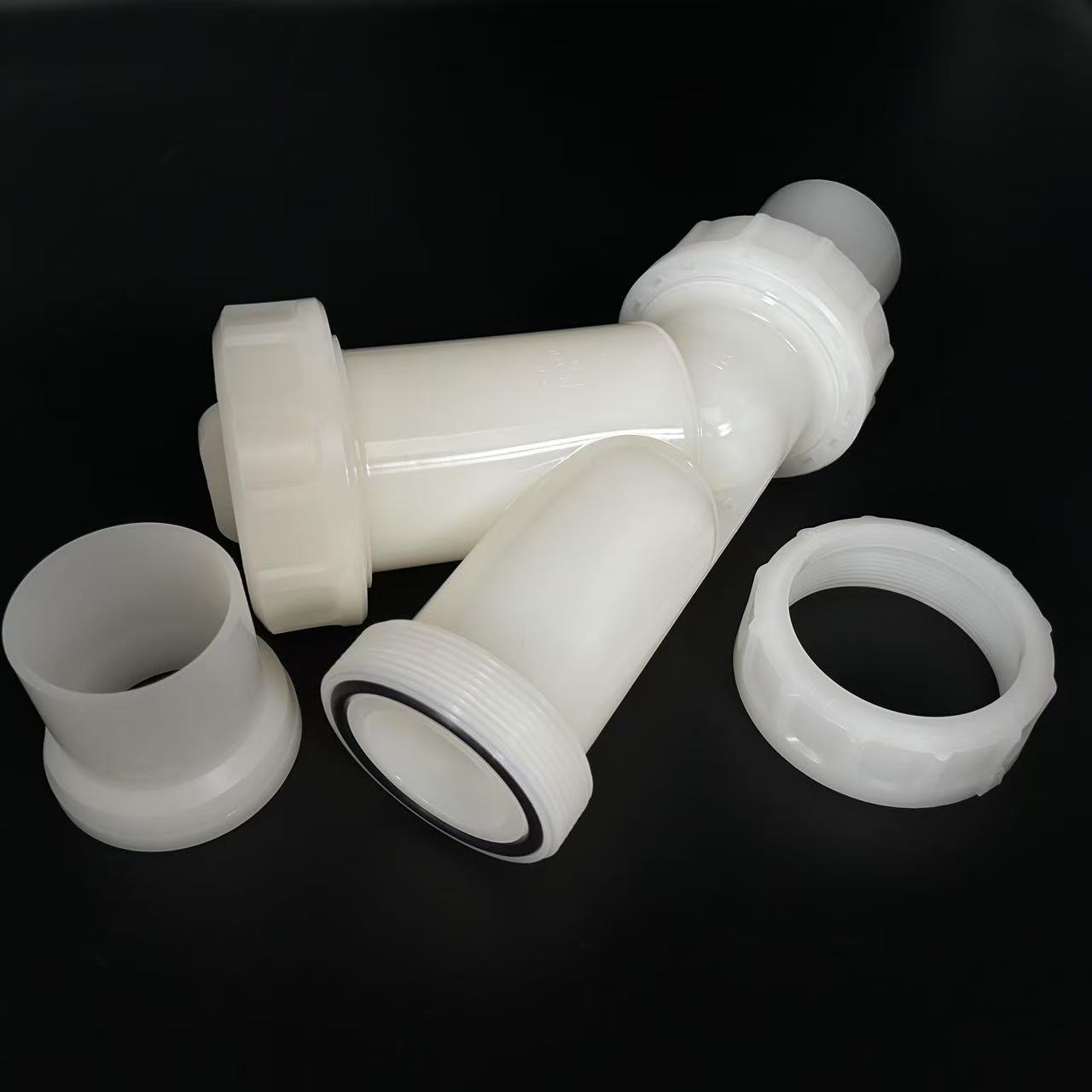
The physical construction of the strainer body directly dictates its operational lifespan. You must evaluate the internal filter element and the external housing simultaneously. A beautiful exterior means nothing if the internal mesh fails under load. Careful component breakdown prevents massive operational headaches down the road.
Mesh sizing strategy forms the absolute foundation of proper equipment protection. Select the correct perforation size or mesh count based on downstream equipment sensitivity. Delicate mag-drive pumps require exceptionally fine filtration to prevent impeller jamming. Conversely, large spray nozzles function perfectly fine handling slightly larger particulate matter. A mesh screen that is too fine clogs rapidly and demands constant maintenance.
Injection molding quality requires strict visual and dimensional inspection. Check the strainer body for visible weld lines, microscopic porosity, or uneven wall thicknesses. Cooling rates during the molding process dictate structural integrity. If the polymer cools too quickly, internal stresses remain trapped inside the housing. These manufacturing defects act as severe stress concentrators during fluid hammer events. A sudden pressure spike from a fast-closing valve will crack a poorly molded housing along these weak lines.
End connections must offer flawless structural integrity. Ensure all flanges, sockets, or threaded ends comply strictly with dimensional standards like ANSI, DIN, or JIS. Seamless site integration prevents dangerous leaks at the primary piping joints. A slight dimensional deviation causes massive installation delays on the job site. Piping crews cannot force misaligned flanges together without introducing fatal mechanical stress.
EPCs carry the immense responsibility of delivering fully operable systems to the end-user. Prioritize operations and maintenance (O&M) practicality during your procurement evaluations. A beautifully engineered piping system fails completely if maintenance teams cannot easily service the installed strainers. Facility operators will curse a design that requires complete pipe disassembly just to clean a simple screen.
Look for practical designs featuring integrated blow-down valves. Removable hex caps also allow for highly efficient in-line cleaning. A blow-down valve sits at the bottom of the Y-branch. Technicians can simply open this small valve to flush out accumulated debris while the system remains pressurized. These features let technicians flush the system entirely without disrupting the primary piping infrastructure.
Avoid these common operational design mistakes:
Pay close attention to the ergonomics of screen removal. The installation location must provide adequate physical clearance to pull the mesh basket out completely. If the design ignores basic clearance requirements, operators will skip crucial maintenance schedules. Integration of troubleshooting instruments is another critical best practice. The strainer design should accommodate the easy installation of differential pressure gauges. These gauges constantly monitor pressure upstream and downstream of the mesh. Operators can easily determine exactly when the strainer needs cleaning based on real-time pressure drop data.
Evaluating the manufacturing partner carries just as much weight as checking the technical spec sheet. You must audit their commercial and technical capabilities thoroughly before shortlisting any vendor. A brilliant product design holds zero value if the manufacturer cannot deliver it on time or maintain consistent quality.
Start by reviewing their dedicated quality control (QA/QC) infrastructure. A reputable manufacturer performs 100% hydrostatic testing on all outgoing valves and strainers. They should hold current ISO 9001 certifications. However, do not just look at the certificate. Ask them to explain how they implement those quality standards on the factory floor daily.
Next, assess their technical documentation standards. An elite supplier readily provides comprehensive project submittals upon request. These submittals must include accurate 2D and 3D CAD models. Engineers need these models quickly to integrate them into plant-wide 3D software like SmartPlant or PDMS. You should also expect a detailed Bill of Materials (BOM) and verified Material Test Reports. Comprehensive O&M manuals must accompany every shipment to guide facility operators through safe installation procedures.
Finally, evaluate supply chain resilience carefully. Analyze their stated lead times against your strict project schedules. Global supply chain disruptions can paralyze a construction site. Ensure they maintain deep inventory levels for critical spare parts like replacement mesh screens and custom O-rings. Strong post-sale technical support capabilities often separate excellent, reliable partners from mediocre commodity vendors.
Evaluating PVDF strainers remains a critical exercise in proactive risk management for any chemical facility. Saving a few dollars on a cheaper upfront unit cost introduces massive operational hazards later. Poor injection molding, incorrect mesh sizing, or missing supplier documentation will quickly negate those initial procurement savings. Focus strictly on material purity, structural integrity, and verified hydraulic data to protect your facility.
Take these actionable steps today:
Review these documents carefully before finalizing any purchase decisions to guarantee seamless project execution. Partnering with the right manufacturer ensures decades of safe, leak-free operation in your most demanding chemical pipelines.
A: Base the mesh size on the maximum allowable particle size for the most sensitive downstream component, typically targeting a screen opening half the size of the largest acceptable particle.
A: No. Thermoplastic pressure ratings derate as temperature increases. Always consult the manufacturer's specific pressure-temperature curve.
A: The most reliable method is monitoring the pressure drop across the strainer. A significant increase in differential pressure (e.g., exceeding 5-7 psi above baseline) indicates a clogged screen.
A: EPCs should require technical data sheets, chemical compatibility charts, dimensioned CAD drawings, hydrostatic test certificates, and a detailed Operation and Maintenance (O&M) manual.


