
close
Choose Your Site
Global
Social Media


Views: 0 Author: Site Editor Publish Time: 2026-08-28 Origin: Site


Distributors constantly face a difficult commercial tension every single quarter. They must balance broad SKU availability to win multi-line bids against the heavy financial drag of dead stock. Industrial contractors are rapidly moving away from fragmented purchasing patterns in today's demanding market. They now expect comprehensive, ready-to-install solutions from a single reliable vendor. Procurement managers actively seek vendor consolidation to reduce heavy administrative burdens. Failing to provide a complete package often means losing the entire project bid. Better-equipped competitors easily swoop in to claim these lucrative contracts.
This article provides a realistic, evidence-based framework for evaluating product lines. It will help you mitigate serious inventory risks efficiently without tying up vital cash flow. You will learn exactly how to structure your portfolio correctly. We also guide you in selecting robust manufacturing partners wisely. Our ultimate goal is to help you maintain healthy margins and strict compliance across your entire product range.
As a plastic fitting distributor, your first operational step involves understanding local market dynamics. You must accurately segment regional demand by specific industry sectors. Common sectors include municipal water treatment, commercial HVAC, chemical processing, and semiconductor manufacturing. Each sector dictates entirely different material requirements. For instance, semiconductor plants require ultra-pure materials. Municipal water systems prioritize high-volume, standard-grade components.
Next, identify the critical split between MRO and Capex demand. MRO represents steady maintenance, repair, and operations activity. It provides highly predictable, recurring revenue streams. MRO clients order smaller batches but order them consistently. Capex represents capital expenditure for massive new infrastructure projects. Capex demand remains highly volatile. However, it offers massive volume spikes during facility construction phases.
Before committing capital to new lines, establish clear success criteria. You should set a strict baseline inventory turnover ratio target. This specific metric prevents your capital from stalling on warehouse shelves. A common mistake is buying bulk without a guaranteed exit route.
We must also face implementation reality squarely. Avoid "over-serving" your specific market demographics. Stocking expensive ultra-high-purity components in a predominantly agricultural region ties up valuable capital unnecessarily. Always align your inventory investments directly with proven local needs. Conduct rigorous customer surveys to validate demand before signing major purchase orders.
Best Practices for Demand Forecasting: Always cross-reference historical sales data against upcoming municipal project bids. If a local township announces a multi-year water infrastructure upgrade, adjust your stocking levels accordingly. Conversely, distributors frequently mistake a one-off Capex spike for a permanent shift in MRO demand. Buying heavily into a niche product line for a single factory construction project often leaves you holding stranded inventory once the facility completes its build phase.
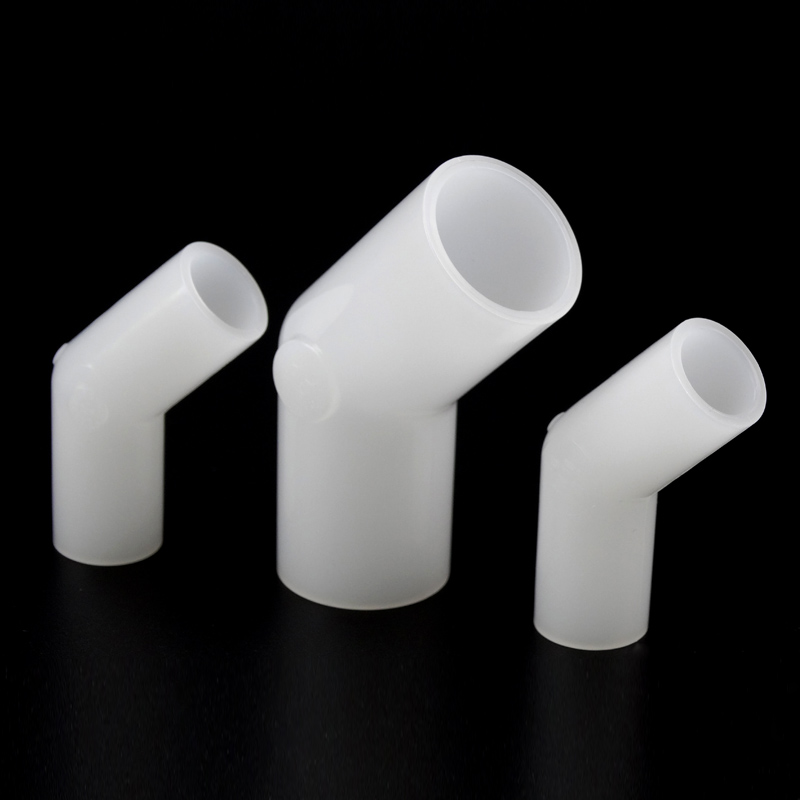
Building a resilient portfolio requires highly strategic mapping. You need to balance fast-moving commodities against highly specialized, slow-moving components. A tiered approach maximizes profitability while minimizing stockouts.
Create a structured tier system for your entire inventory portfolio. Standard PVC handles basic cold water and drainage efficiently. CPVC steps up to manage elevated temperatures for hot water systems. However, industrial environments require entirely different solutions.
Next, adopt the highly effective "add-on" strategy. You should aggressively incorporate chemical piping accessories into your main catalog. Stocking specialized valves, gaskets, and backing rings allows you to provide complete system packages. Industrial buyers prefer purchasing an entire pre-kitted skid. This proactive approach protects your bids from aggressive piecemeal competitors. It positions you as a comprehensive solutions provider rather than a mere parts peddler.
Portfolio Classification Matrix
| Tier Level | Product Category | Sales Velocity | Target Profit Margin | Primary Target Application |
|---|---|---|---|---|
| Tier 1 | Standard PVC / CPVC parts | High | Low to Moderate | Basic plumbing, daily MRO tasks |
| Tier 2 | Double-Containment systems | Medium | Solid / Above Average | Industrial chemical processing facilities |
| Tier 3 | PPH / PVDF components | Low | Premium / High | Harsh corrosive fluid handling |
Finding reliable manufacturing suppliers involves much more than comparing baseline quotes. When evaluating plastic pipe fittings wholesale partners, you must calculate the Total Landed Cost meticulously. A nominal five percent reduction in unit price quickly vanishes in practice. It disappears if lead times stretch fifteen percent longer. High defect rates also destroy your margins through costly product returns and unhappy clients.
Demand entirely transparent documentation from every single partner. Suppliers must provide verifiable ASTM, DIN, ISO, or NSF certifications upon request. These standard certifications must remain entirely relevant to your specific target markets. Selling non-compliant materials exposes your distribution business to massive legal liabilities. Always verify certification numbers through official third-party databases before signing agreements.
You must also assess the true scalability of the manufacturer. Investigate their current production capacity carefully. Ask hard questions about their machine count and shift schedules. Can they handle sudden project spikes effectively? They should never force you into allocating precious stock away from loyal MRO clients to fulfill a single large order.
Finally, make transparent assumptions about future logistics and shipping. Assume major supply chain disruptions will inevitably occur. Port strikes, extreme weather, and material shortages happen frequently. You should favor wholesale partners who maintain domestic warehousing capabilities. Proven, robust logistical contingency plans are absolutely non-negotiable today.
Best Practices for Auditing Partners: Request their latest ISO 9001 facility audit report. Review their material traceability procedures thoroughly. If a batch fails in the field, they must trace it back to the exact resin lot. A common mistake involves ignoring packaging quality during the evaluation phase. Poorly boxed fittings arrive scuffed or damaged, rendering them completely unusable for high-purity applications.
Expanding your product range introduces specific operational hazards. The most common pitfall is the strict Minimum Order Quantity (MOQ) trap. High MOQs on specialized parts can rapidly destroy your operational cash flow. Distributors often buy three years of stock just to get a marginal discount. You should always negotiate mixed-pallet shipments during any initial pilot phase. This keeps capital fluid while testing market waters.
Space constraints present another massive logistical hurdle for distributors. Plastic components degrade severely under prolonged outdoor UV exposure. Ultraviolet light actively breaks down the polymer chains within unpigmented plastic materials. This degradation severely reduces the impact strength and pressure rating of the pipe. You must carefully evaluate your indoor warehouse capacity first.
Do this before bringing in high volumes of bulky materials. Large-diameter industrial pipes consume pallet rack space exponentially faster than standard residential sizes. If outdoor storage remains unavoidable, you must utilize specialized UV-resistant tarps. Furthermore, you must implement strict First-In, First-Out (FIFO) inventory rotation.
Staff enablement is equally critical for successful catalog implementation. Technical sales teams must undergo rigorous training on the new range. Selling standard PVC often requires only basic order-taking skills. Conversely, selling complex polymers requires deep consultative engineering knowledge. Your team must confidently discuss chemical resistance profiles. They must clearly explain operating temperature limits to consulting engineers.
A very common mistake involves launching new products without proper sales enablement. If your team cannot explain the technical value, the new inventory fails. It will simply gather dust in the darkest corners of your warehouse facility.
Implementation requires a methodical, deeply analytical step-by-step approach. Follow this structured roadmap to expand your catalog safely and profitably. Skipped steps usually result in stranded capital and frustrated warehouse staff.
By sticking rigidly to this structured logic, you minimize financial exposure. You also ensure your warehouse team adapts smoothly to the updated product mix. Methodical execution separates elite distributors from average supply houses.
Building a resilient fitting range is fundamentally an exercise in risk management. It requires precise margin optimization and careful strategic planning from leadership. Successful distributors do not merely sell individual plastic parts. They sell guaranteed availability and unwavering technical reliability to their industrial clients.
By deliberately structuring your portfolio, you protect your business from fierce commoditized competition. You also secure high-value industrial projects that demand single-source accountability. Avoiding dead stock requires balancing fast-moving goods against profitable specialty items.
We highly recommend taking immediate action to upgrade your supply chain today. Request a comprehensive technical catalog from your potential manufacturing partners. Schedule a dedicated wholesale partnership consultation to discuss favorable payment terms. Finally, order a physical sample box to verify their manufacturing tolerances firsthand before committing your capital.
A: Typically, a 70/30 or 80/20 split between standard commodity parts and specialty items is recommended. This balanced ratio helps maintain healthy cash flow. It simultaneously allows you to capture high-margin project bids effectively. Keep in mind this ideal ratio often varies based on your regional industry density.
A: Rigid Minimum Order Quantities can easily lead to overstocking unproven product lines. Distributors should proactively negotiate specialized pilot phase terms with their wholesale partners. Allowing for mixed-SKU container loads lets you test local market reception safely without destroying your capital reserves.
A: Ad-hoc sourcing severely delays critical project fulfillment times. Stocking essential accessories prevents industrial contractors from splitting the bill of materials with a competitor. Providing a complete system package safeguards your entire project margin and builds long-term client trust.
A: The necessary certifications depend heavily on the final application. Generally, you should look for ASTM for precise dimensional standards. Require NSF 14/61 for any potable water applications. ISO 9001 facility certifications ensure facility quality management, providing vital liability protection and spec-compliance.


