
close
Choose Your Site
Global
Social Media


Views: 0 Author: Site Editor Publish Time: 2026-08-29 Origin: Site


Procuring fluid control systems in massive volumes carries incredibly high stakes. A single failed valve in a chemical processing line can instantly halt production. Worse, it might cause severe environmental hazards. You simply cannot afford to rely on generic specification sheets alone. Instead, you must shift your focus toward verifiable manufacturer testing protocols. Identifying a reliable supplier for a bulk PVDF ball valve order requires looking far past polished marketing materials. You must scrutinize their specific Quality Assurance (QA) and Quality Control (QC) testing frameworks. Proving quality on paper is relatively easy. Proving it on the assembly line is much harder. We will guide you through the exact technical evaluations you need to demand before signing a purchase order. You will learn how to parse pressure tests, verify material purity, and ultimately protect your operations from catastrophic fluid system failures.
You evaluate a prototype sample carefully. It passes your initial inspections perfectly. The real problem arises when the bulk production run arrives at your facility. Bulk orders frequently suffer from inconsistent molding processes or poor assembly execution. A prototype receives special attention from the engineering team. However, mass production reveals a factory's true capabilities. When production scales up, cycle times decrease. Workers may rush the assembly of critical internal components. This creates a dangerous gap between prototype quality and final delivery quality. Without strict oversight, manufacturing defects slip through easily.
Valve failures trigger severe cascading consequences. System downtime paralyzes your daily output. Toxic leaks endanger workers on the factory floor. They also invite massive regulatory fines. Furthermore, you face significant replacement labor costs. Maintenance teams must pull the flawed units out and install new ones. The physical hardware is just one small part of the replacement burden. Halting a continuous chemical process requires complex shutdown procedures. You lose valuable time and resources during every unplanned outage. A cheap valve quickly becomes the most expensive component in your facility.
You cannot base a successful bulk purchase solely on low unit pricing. It relies entirely on standardized Factory Acceptance Testing (FAT). You need transparent documentation to verify these tests. This documentation proves the manufacturer actually checks every production batch. Good testing acts as an insurance policy. It guarantees the valves will perform exactly as specified. You must establish clear success criteria early in the negotiation phase. Suppliers must understand your zero-tolerance policy for defective fluid control components.
Buyers must evaluate a supplier’s Acceptable Quality Limit (AQL) sampling rate. For large orders, do they perform 100% testing or statistical batch sampling? We strongly recommend demanding 100% testing for basic pressure and leakage checks. Statistical sampling leaves too much room for undetected flaws. If they only test one out of every ten valves, nine remain unknown. In critical fluid control, an unknown valve is a dangerous valve. Quality assurance must cover the entire production volume comprehensively.
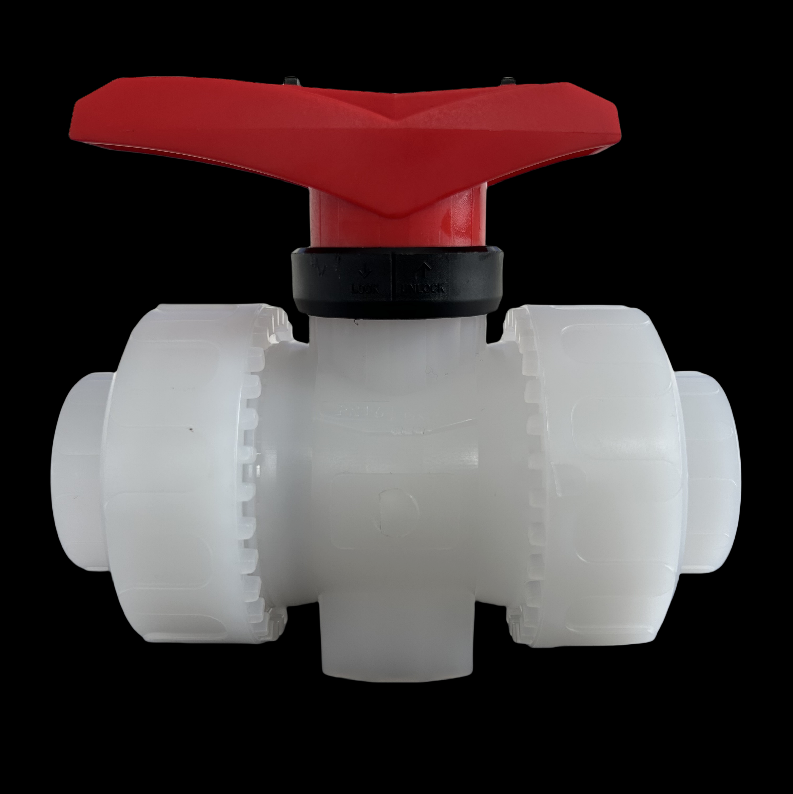
A proper test protocol leaves no room for assumptions. It verifies the valve body's structural integrity comprehensively. Facilities typically conduct this using water. They pressurize the water to 1.5 times the maximum working pressure. You need a rigorous PVDF valve pressure test to expose physical weaknesses. Inspectors must look closely for micro-cracks during this stage. They must also check for porosity in the injection-molded PVDF body. Small molding defects cause sudden ruptures under operational stress. Water testing safely simulates extreme pressure surges without risk of explosion.
Water tests are excellent for verifying overall structural integrity. However, they might miss tiny microscopic defects. We strongly highlight the necessity of low-pressure air tests. Facilities typically conduct these pneumatic tests at 80 to 100 psi. Air molecules are significantly smaller than water molecules. They escape quickly through tiny leak paths. This reveals hidden flaws in the valve structure. Combining both water and air testing provides complete confidence in the shell's integrity. Never skip the pneumatic evaluation phase.
Do not accept arbitrary or proprietary testing methods. Demand strict alignment with global testing frameworks. Good benchmarks include ISO 5208, API 598, or EN 12266-1. These standards establish an authoritative evaluation baseline. They ensure the test parameters meet strict global engineering requirements. Following these guidelines removes guesswork from the QA process. It gives procurement teams a solid foundation for evaluating different suppliers. Standardized testing also ensures compatibility across international industrial facilities.
We outline the essential pressure test evaluation criteria below.
| Test Category | Testing Medium | Typical Pressure Parameter | Primary Detection Goal |
|---|---|---|---|
| Hydrostatic Shell Test | Water | 1.5x Maximum Working Pressure | Body strength, micro-cracks, molding porosity |
| Pneumatic Shell Test | Air / Nitrogen | 80 - 100 PSI | Microscopic shell leaks invisible to water |
| High-Pressure Closure | Water | 1.1x Maximum Working Pressure | Seat deformation under severe load |
| Low-Pressure Closure | Air | 60 - 80 PSI | Seal alignment and minor surface defects |
A robust testing protocol pushes the internal components to their absolute limits. Suppliers should test the PTFE ball seats across varying dynamic parameters. They must evaluate both high and low-pressure differentials. This strict valve leakage test ensures absolutely zero leakage across the entire operating spectrum. Low-pressure tests often reveal seat issues much faster than high-pressure tests. Under low pressure, the internal ball does not press tightly against the seat. If the machining is poor, it will leak immediately. Proper seat testing ensures long-term operational safety.
Static tests alone are never enough for moving mechanical parts. You must evaluate FPM/FKM or EPDM O-rings under dynamic conditions. This involves repeatedly opening and closing the valve while under pressure. Dynamic cycling simulates actual real-world usage accurately. It proves the stem seals will not fail after repeated actuation. Stem leaks are highly common in poorly manufactured valves. Dynamic verification catches these weaknesses before they reach your pipeline. It forces the seals to prove their resilience under friction.
PVDF behaves differently across its broad thermal range. It functions effectively from -40°C up to 140°C. Temperature fluctuations cause distinct thermal expansion and contraction in the plastic. Test reports should explicitly indicate the thermal testing conditions. Did the facility conduct leakage tests at ambient temperatures or elevated ones? Elevated temperature tests offer better assurance for demanding environments. PTFE seats expand differently than the PVDF body. Proper testing ensures they maintain a tight seal regardless of severe temperature shifts.
Here are some common mistakes buyers make regarding leakage protocols:
Material integrity dictates long-term chemical compatibility. A high-quality chemical ball valve requires 100% virgin PVDF resin. Leading global brands like Solvay or Arkema provide highly reliable base materials. You must actively avoid suppliers using recycled regrind in their molding machines. Regrind heavily compromises chemical resistance and structural strength. It introduces unknown contaminants into the polymer matrix. These contaminants create weak points that fail rapidly upon chemical exposure. Purity is the foundation of corrosion resistance.
How do you know the plastic will perform consistently? Suppliers should test raw material batches before they start injection molding. They must conduct rigorous Melt Flow Index (MFI) and density checks. These metrics confirm the resin meets optimal molding specifications. Inconsistent MFI leads to weak spots in the final valve body. If the plastic flows too quickly or too slowly, the mold will not fill correctly. This causes internal voids that severely compromise pressure ratings. Solid material science prevents mechanical failures.
Not all applications demand the exact same purity level. You must differentiate between standard industrial grade and ultra-pure semiconductor grade. A standard industrial PVDF valve handles typical corrosive chemicals effectively. Ultra-pure grades require strict cleanroom manufacturing environments. They must prevent even microscopic particulate contamination. Testing stringency scales directly with your specific application's sensitivity. Always verify the material certificates match your project requirements exactly. Do not overpay for semiconductor grades if you only pump standard wastewater.
You must watch out for generic, copy-pasted "Certificates of Conformity." These standard documents often mean nothing in a bulk order scenario. Advise your team to maintain deep skepticism if a supplier cannot provide heat or batch numbers. These unique numbers must tie directly to specific test results. If the paperwork looks identical across multiple orders, investigate further immediately. Manufacturers must trace every single valve back to its original resin batch. Traceability guarantees accountability during production.
You need hard, verifiable proof of quality. Instruct your procurement team to ask for specific batch test reports. Request comprehensive Material Safety Data Sheets (MSDS) for all wetted components. You should also demand third-party lab validations whenever possible. Independent verification removes the inherent risk of supplier bias. A reliable factory will gladly share their internal audit results. They understand that transparency builds long-term commercial trust. Good suppliers view rigorous testing as a competitive advantage.
Use a logical, step-by-step checklist for moving a supplier to your final shortlist. We recommend a strict three-step evaluation process for bulk procurement.
Following this checklist filters out low-quality manufacturers rapidly. It ensures you only engage with partners capable of delivering consistent excellence. Procurement teams must enforce these standards rigorously during vendor onboarding.
Verifiable testing remains your strongest defense in industrial procurement. It is the only barrier between a cost-saving bulk purchase and a catastrophic system failure. You must look beyond unit prices and basic spec sheets. Demand strict adherence to hydrostatic and pneumatic pressure testing protocols. Ensure the manufacturer proves their material purity with undeniable documentation. When you enforce these standards, you protect your infrastructure effectively. Quality assurance is never an area for compromise.
We strongly encourage your procurement teams to take immediate, tangible action. Always request a physical sample valve before making a large commitment. Ask for its specific, serialized test report alongside the sample. Review the dynamic seat testing data and material tracing logs carefully. Do this before committing to any full-scale industrial order. This simple verification step validates the manufacturer's true capabilities. It guarantees your fluid control system will operate safely and efficiently for years.
A: You should focus on achieving "Rate A" compliance under standard ISO 5208 or API 598 guidelines. Rate A signifies absolutely zero visible leakage during the designated test duration. For resilient-seated soft valves using PTFE seats, any visible drops or bubbles indicate a critical manufacturing failure.
A: Reputable manufacturers conduct 100% testing for pressure and seat leakage on the assembly line. Every single valve must pass these physical checks. Conversely, material destruction tests or extreme thermal cycling tests are typically done by batch. Statistical sampling is appropriate only for destructive testing methods.
A: Factories utilize automated torque testing machines during final assembly. This ensures the valve operates smoothly under pressure. If the assembly is too tight, it causes premature wear on the internal seats. If it is too loose, you risk immediate fluid leaks during system operation.


