
close
Choose Your Site
Global
Social Media


Views: 0 Author: Site Editor Publish Time: 2026-06-01 Origin: Site


In the high-stakes world of corrosive fluid transfer, connector failure poses a massive operational threat. It frequently serves as the primary source of catastrophic leaks, immediate environmental safety hazards, and unscheduled system downtime. Selecting the right components goes far beyond simply identifying a fluoropolymer material. You must adopt a rigorous engineering approach to secure long-term system integrity.
Specifying these crucial components requires aligning multiple technical variables. You must match polymer grades, joining methods, and mechanical designs directly to your specific chemical concentrations. Furthermore, you must evaluate extreme temperature fluctuations and dynamic operational pressures. A superficial selection process often leads to dangerous blowouts or rapid material degradation in harsh industrial environments.
This guide provides engineers and procurement teams with a strict, evidence-based framework. We aim to help you evaluate and specify the correct solutions for demanding industrial applications. You will learn how to define exact chemical limits, navigate critical joining rules, and enforce rigorous pressure testing standards. Following these guidelines ensures maximum safety and reliability across your entire fluid transfer network.
Chemical Boundaries: PVDF excels against strong acids and halogens but will degrade or swell in the presence of strong amines and polar organic solvents (like MEK or acetone).
Joining Strictness: Due to exceptionally low surface energy, PVDF cannot be glued. Connectors must be integrated via thermal fusion (socket, butt, or IR) or precise mechanical threading.
Thermal Derating: While PVDF operates up to 150°C, pressure ratings must be aggressively derated as temperature increases to prevent mechanical fatigue and deformation.
Polymer Selection: Buyers must specify between Homopolymer (rigid, high-temperature) and Copolymer (flexible, higher impact resistance) based on the specific pipeline demands.
Assess your exact fluid composition thoroughly before finalizing any piping design. A highly specified chemical resistant connector made of PVDF thrives under notoriously harsh conditions. It handles aggressive media like sulfuric acid, hydrochloric acid, and concentrated sodium hydroxide beautifully. You will also see exceptional longevity in heavily chlorinated environments. These include municipal water treatment plants, semiconductor etching lines, and industrial metal pickling facilities.
However, you must apply a deeply skeptical lens when reviewing general chemical compatibility charts. Do not over-specify materials blindly based on basic resin data. PVDF possesses specific chemical vulnerabilities. It will fail structurally if you expose it to strong amines or extreme bases. Furthermore, polar organic solvents like acetone or methyl ethyl ketone (MEK) attack the polymer chains directly. These solvents cause the material to swell, soften, and eventually rupture under operational pressure.
You must also master temperature-pressure derating mechanics. Acknowledge the broad operational window spanning from -40°C up to 150°C. Emphasize one critical engineering rule: high temperatures drastically reduce both chemical resistance thresholds and maximum allowable working pressure. Heat softens the semi-crystalline structure of the polymer. Relying solely on ambient temperature data for a high-heat application will result in premature mechanical fatigue and system failure.
Request precise fluid data: Always obtain the Material Safety Data Sheet (MSDS) for the exact chemical blend.
Account for concentration spikes: Evaluate how chemical evaporation or mixing variations might spike acid concentrations.
Monitor heat generation: Remember exothermic chemical reactions generate internal heat, artificially raising the fluid temperature beyond ambient levels.
Use the following basic chart as a conceptual reference. Always consult your specific manufacturer for exact curve data.
Operating Temperature (°C) | Operating Temperature (°F) | Pressure Derating Factor | Max Pressure (Assumed Base 150 PSI) |
|---|---|---|---|
20°C | 68°F | 1.00 (No Derating) | 150 PSI |
50°C | 122°F | 0.75 | 112 PSI |
90°C | 194°F | 0.45 | 67 PSI |
120°C | 248°F | 0.25 | 37 PSI |
150°C | 302°F | 0.10 | 15 PSI |
Choosing the correct physical configuration dictates the long-term maintainability of your pipeline. A standard PVDF pipe connector serves as the default choice for permanent, linear fluid routing. Engineers rely on these standard components for fixed directional changes using elbows and tees. They fit perfectly into continuous, uninterrupted transfer lines where system breakdowns rarely occur. Once fused into place, they form a monolithic structure.
Conversely, you must install a PVDF union connector in highly active, maintenance-heavy zones. Unions feature a specialized threaded nut and tailpiece assembly. They allow operators to rapidly disconnect pipeline segments without ever cutting the primary pipe. You should specify these components near chemical dosing pumps, flow control valves, and filtration units. Anywhere periodic servicing or equipment swapping remains guaranteed requires a union.
System modularity demands different hardware. Choose a reliable PVDF quick connector for temporary bypass setups, fluid sampling lines, or mobile dosing skids. When evaluating quick connects, you must inspect their internal sealing mechanisms carefully. Evaluate the internal O-ring material thoroughly. Common options include FKM, Viton, or PTFE-encapsulated rubber. Ensure the internal seal matches the PVDF body’s high chemical resistance to prevent hidden internal seal blowouts.
Finally, hybrid infrastructures require careful transition planning. When bridging PVDF segments to legacy steel or FRP-lined pipes, utilize robust corrosive liquid fittings engineered for transition zones. Flanged connections offer the best mechanical solution here. They help manage the differing thermal expansion rates between plastics and metals. Using proper backing rings and precise bolt torque sequences ensures structural integrity across heterogeneous pipeline systems.
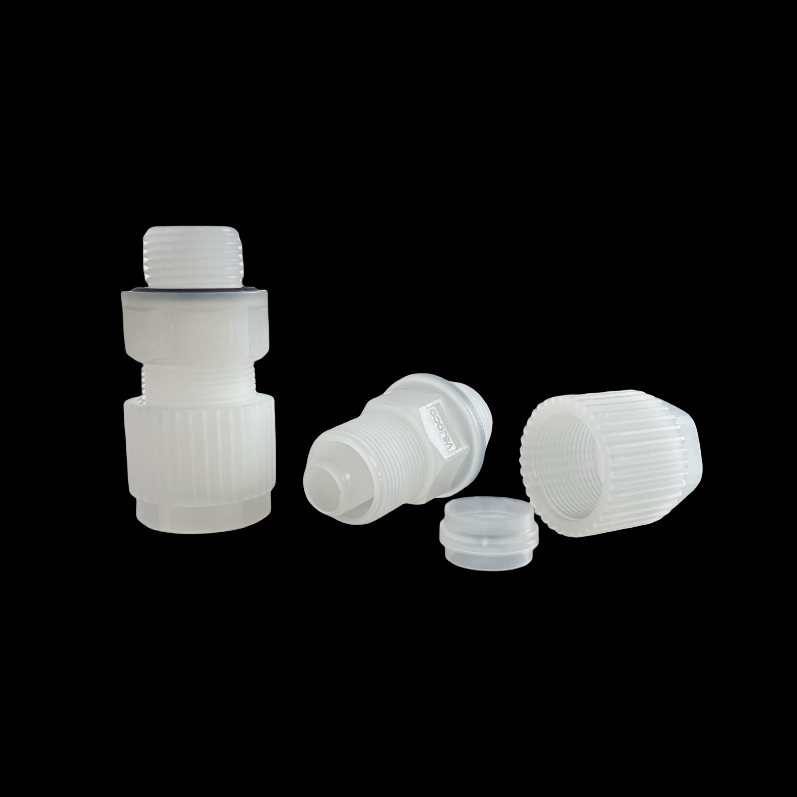
You cannot treat all PVDF materials equally. Engineers must differentiate between distinct polymer grades to ensure mechanical survival. The primary decision involves choosing between homopolymer and copolymer formulations. Each grade behaves differently under physical stress and extreme temperatures.
Homopolymer PVDF features a highly crystalline molecular structure. It delivers maximum material rigidity and superior mechanical tensile strength. Furthermore, it boasts the highest temperature resistance available within this polymer family. Homopolymers excel in standalone, rigid pipe networks requiring zero deflection. If you need a pipeline to carry high-pressure acids across long factory spans, specify a homopolymer grade.
Copolymer PVDF incorporates a secondary monomer during the manufacturing process. This specific chemical addition fundamentally changes the physical properties. It drastically increases structural flexibility and overall impact resistance. While it possesses a slightly lower upper-temperature threshold, it outperforms homopolymers in dynamic environments. Copolymers remain superior for environments prone to heavy machinery vibration. They also perform exceptionally well as an extruded lining material inside metallic infrastructure, absorbing internal stresses effortlessly.
Feature / Property | Homopolymer PVDF | Copolymer PVDF |
|---|---|---|
Molecular Structure | High crystallinity, dense alignment | Added secondary monomer, reduced crystallinity |
Mechanical Rigidity | Extremely rigid, high tensile strength | Flexible, highly resistant to impact |
Temperature Resistance | Excellent (Up to 150°C) | Very Good (Up to ~130°C depending on blend) |
Vibration Tolerance | Low to Moderate (Prone to fatigue if unsupported) | Excellent (Absorbs mechanical shock effectively) |
Primary Applications | Standalone structural piping, high-heat transfer | Flexible tubing, metal pipe lining, seismic zones |
Understanding integration methodology stands as the most critical aspect of pipeline construction. We must address the absolute "no-glue" rule immediately. PVDF possesses exceptionally low surface energy. Its inherent non-stick nature actively rejects all conventional solvent cements, primers, and industrial glues. You simply cannot chemically bond these materials together. Plumbers attempting to use PVC adhesives on fluoropolymers will create immediate, catastrophic leak points.
Socket and butt fusion represent the proven industry standard for creating permanent, monolithic joints. This process requires specialized heating equipment. Technicians must melt the polymer ends precisely, typically requiring temperatures of 500°C or greater. The melted surfaces fuse together under pressure to form a continuous material block.
However, significant risk factors exist during manual fusion. Improper heating times cause inadequate melt depths, leading to brittle joints. Furthermore, inadequate allowance for thermal expansion during the cooling phase causes internal stress cracking. These micro-cracks propagate silently until sudden failure occurs.
Advanced industries demand stricter protocols. Infrared (IR) and beadless welding remain the required standards for semiconductor and high-purity pharmaceutical lines. This method utilizes non-contact radiation heating. By avoiding direct physical contact with hot metal plates, the process eliminates trace metal contamination.
Zero Metal Contamination: Radiant heat prevents cross-contamination from degraded Teflon-coated heating plates.
Internal Smoothness: Beadless systems use an internal inflatable bladder. This flattens the internal weld seam completely.
Bacteria Prevention: Eliminating the internal weld bead prevents fluid stagnation zones, drastically reducing biofilm buildup.
Automated Traceability: IR welding machines record exact heating times and pressures digitally for strict quality auditing.
Mechanical and threaded joints offer viable solutions primarily for smaller pipeline diameters or equipment transition points. Operators must exercise extreme caution here. You must wrap threaded fittings generously using high-density PTFE tape to achieve a secure seal. The primary risk factor involves thermal cycling. Metal and plastic threads expand at different rates. Without precise torque management, threaded joints remain highly prone to weeping micro-leaks under heavy temperature swings.
Flawless material selection means nothing without rigorous installation quality control. High-quality pipeline installations require incredibly strict dimensional tolerances. Technicians must verify precise alignment before applying heat. For example, maintaining a strict gap tolerance of 0.2mm or less prior to butt fusion proves critical. Tighter gaps ensure uniform polymer blending during the critical melt phase. Misaligned pipes create weak spots susceptible to pressure spikes.
Managing thermal expansion ranks as the top priority for outdoor or high-heat installations. PVDF expands significantly more than carbon steel or traditional metals when exposed to heat. Installations must utilize proper sliding pipe clips. You must provide continuous structural support along long horizontal runs. Proper bracketing prevents the pipeline from sagging under the weight of heavy liquid. More importantly, it prevents severe stress accumulation directly at the connector joints. Unmanaged expansion literally tears fused fittings apart over time.
Finally, standardizing your pressure testing protocols guarantees operational safety. Never commission a corrosive transfer line without conducting rigorous, documented testing. Visual inspections simply do not suffice for acid lines.
System Purge: Flush the entire system with clean water to remove dust and eliminate dangerous air pockets.
Pressurization: Gradually increase the internal water pressure to exactly 1.5 times the intended maximum working pressure.
Stabilization phase: Allow the pipeline to sit under pressure for 3 to 4 hours. This allows the polymer to undergo initial mechanical stretching.
Evaluation: Apply a strict pass criterion. The system passes only if the pressure drop measures 3% or less, with absolutely zero visible seepage at any joint.
Selecting reliable fluoropolymer fittings requires disciplined engineering logic. Base your final procurement decision on a rigid, repeatable sequence. First, verify the complete absence of degrading chemicals like strong amines or polar organic solvents. Second, calculate your precise maximum temperature and aggressively derate your working pressure accordingly. Third, select the exact physical shape you need based on maintenance requirements. Fourth, match your chosen joining method to your facility's purity and infrastructure capabilities.
Take proactive next steps before finalizing your system specifications. We strongly urge buyers to consult directly with technical specialists during the planning phase. Always request comprehensive material safety data sheets (MSDS) for your transfer fluids. Furthermore, demand exact pressure-temperature derating curves from your manufacturing partners. Gathering this empirical evidence ensures a safe, reliable, and leak-free industrial fluid system.
A: Absolutely not. PVDF's extremely low surface energy aggressively prevents solvent adhesion. Standard glues simply peel off the surface. All connections within this system must be mechanically threaded, flanged, or integrated using strict thermal fusion methods.
A: While both belong to the fluoropolymer family, PVDF offers significantly higher mechanical strength and rigidity. This makes it far better for structural, load-bearing piping. PTFE features a broader chemical resistance range and lower friction. However, PTFE is much softer and remains highly susceptible to cold flow under pressure.
A: Yes. The material is inherently resistant to UV degradation and radiation. This distinct molecular stability makes it an excellent choice for outdoor corrosive transfer lines. You can install these pipelines outdoors without requiring external paints or protective jackets.
A: Early warning signs manifest visually. Look for localized yellowing or heavy discoloration, indicating severe thermal degradation or chemical attack. Inspect the fusion joints closely for micro-cracking, which signals mechanical fatigue from thermal expansion. Visible sagging near the fittings also warns of an impending structural breach.


