
close
Choose Your Site
Global
Social Media


Views: 0 Author: Site Editor Publish Time: 2026-07-31 Origin: Site


Unreliable joints in industrial fluid handling systems lead to hazardous leaks. They cause severe unplanned downtime and demand highly costly remediation efforts. Engineers rely heavily on robust pipe integration to maintain overall plant safety. Polypropylene Homopolymer (PPH) is highly prized in chemical processing for its exceptional resistance to harsh acids and alkalis. However, the ultimate integrity of the system depends entirely on the socket fusion process. It also relies heavily on the dimensional accuracy of the manufactured fittings. Diagnosing the exact root causes of weak joints is the essential first step. These causes range from improper thermal profiles to subpar fitting manufacturing. This diagnosis helps you establish a robust evaluation framework for sourcing highly reliable piping components. You will discover exactly why these joint failures happen and how to spot them early. We will systematically explore mechanical errors, environmental factors, and vendor quality checks. By the end, you will firmly know how to evaluate suppliers and implement standardized, risk-free rollouts effectively. Understanding these hidden variables ensures your chemical systems operate smoothly for decades.
Most joint failures stem from deviations in heating times, inadequate insertion depth, or contamination prior to fusion.
Inconsistent manufacturing tolerances in a given PPH socket fusion coupler can make reliable welding impossible, even with perfect operator technique.
Evaluating vendor capabilities requires verifying raw material traceability (resin grade) and strict adherence to dimensional standards (e.g., DIN/DVS guidelines).
Standardizing environmental controls and tool calibration is non-negotiable for mitigating implementation risks in large-scale piping rollouts.
A compromised chemical pipeline joint is not merely a routine maintenance issue. It represents critical safety hazards and severe environmental compliance violations. Regulatory bodies strictly monitor fluid handling systems for toxic leaks. Even a minor drip can trigger immediate operational halts and substantial regulatory fines. A successful fusion process should yield a perfectly monolithic structure. The resulting weld must be as strong as the pipe itself. Ideally, it should demonstrate greater tensile strength than the surrounding material. When executed correctly, the piping system delivers a reliable 25-to-50-year service life. It confidently withstands rated pressures and extreme internal temperatures without degrading.
However, facility managers must consider the hidden, compounding costs of a failed joint. Reworking a failed fusion connection requires complete system drainage. You must perform thorough chemical neutralization before any maintenance team can safely intervene. Technicians then cut out adjacent pipe segments entirely, generating extensive material waste. This labor-intensive process heavily multiplies the cost of the original component. You lose valuable production time while exposing your maintenance team to unnecessary chemical risks. A proactive approach to quality control prevents these expensive disruptions. Investing in superior components upfront drastically reduces your long-term maintenance burdens.
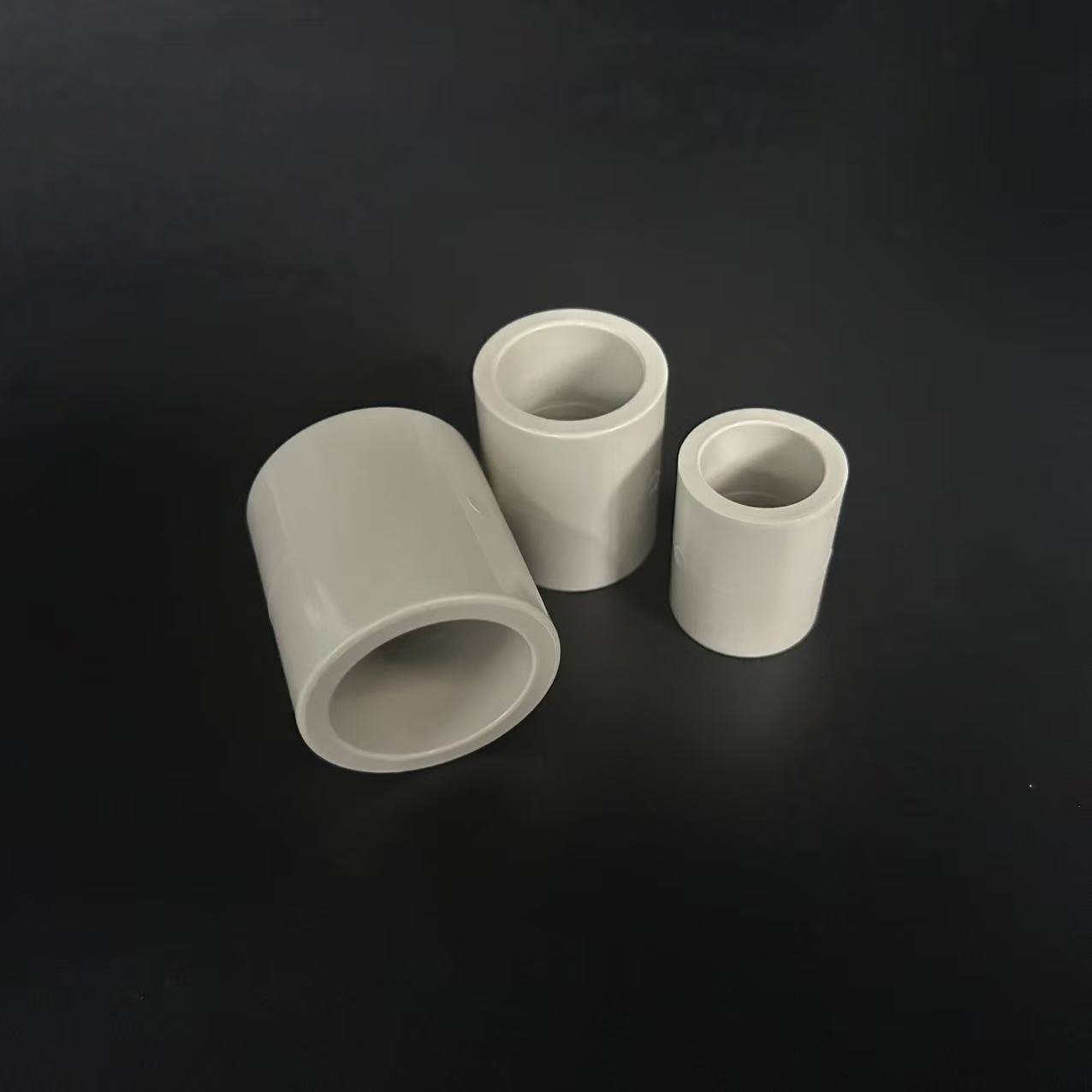
Fusing a PPH socket fusion coupler requires exact thermal and mechanical precision. When joints fail under pressure, we usually trace the issue back to three primary categories. Understanding these specific categories helps you proactively prevent future pipeline leaks.
Precise temperature control dictates the ultimate success of your weld. Cold welds frequently occur due to insufficient heating time. Low heater plate temperatures also fail to melt the polymer adequately. This failure prevents essential molecular entanglement across the entire fusion zone. Without proper entanglement, the plastic surfaces simply stick together temporarily rather than forming a cohesive bond. Conversely, excessive heat causes rapid polymer degradation. Prolonged exposure to high temperatures destroys the internal PPH resin structure. It causes severe material brittleness and noticeably reduces the joint's overall pressure tolerance.
Even perfectly calibrated temperatures cannot fix poor mechanical handling. Inadequate insertion depth remains a frequent field mistake among hurried technicians. Failing to mark and reach the exact socket depth leaves a harmful internal gap. This unintended gap creates internal fluid turbulence and highly localized mechanical stress points. Over time, fluid pressure exploits these stress points, causing sudden ruptures. Excessive force during the insertion phase is another critical error. Misalignment easily happens when operators push the heavy pipe in at a slight angle. Twisting the pipe during insertion violently shears the molten material. This twisting action severely compromises the internal weld area and creates hidden voids.
Your immediate working environment directly impacts final joint strength. Moisture and airborne particulates act as invisible, destructive barriers. Dust, machine oil, or condensation physically block the pipe from the socket. They directly inhibit proper molecular fusion across the heated surfaces. Oxidation presents another hidden but highly common danger. Technicians must peel or chamfer the pipe ends properly before heating. Failing to do so leaves aged, UV-oxidized surface layers intact. These hardened, degraded layers cannot properly fuse with the fresh resin inside the fitting.
When you spot socket fusion defects in the field, you must identify the true source quickly. The common blame game between field operators and manufacturers wastes valuable time. We need highly objective criteria to confidently diagnose the actual root cause.
Human error generally leaves distinct, readable visual clues behind. Uneven dual melt rings strongly indicate poor manual handling during insertion. Scorched, darkened material usually points to uncalibrated or malfunctioning heating irons. If the PTFE coating on the heating element degrades, plastic sticks and burns. Misaligned pipe axes show a clear lack of proper mechanical pipe clamps. You can often correct these specific issues through rigorous, standardized training programs and improved field supervision.
Sometimes, the operator performs perfectly but the joint still inevitably fails. If standardized welding parameters consistently yield noticeably loose fits, suspect the hardware. Excessive melt push-out during standard insertion is another major red flag. In these frustrating cases, the internal diameter of the PPH welding fitting likely falls outside acceptable manufacturing tolerances. Ovality issues practically guarantee a weak, uneven fusion zone. Out-of-round couplers completely prevent uniform heat distribution during the critical warming phase.
Before automatically blaming your field technicians, examine your hardware inventory closely. Perform a strict, randomized dimensional audit of the current fittings. Use high-precision digital calipers to measure the internal diameters accurately. Compare these measurements directly against specified standard dimension ratios (SDR). This essential step ensures you do not unfairly penalize skilled operators for utilizing fundamentally flawed vendor products.
The diagnostic comparison table below highlights how to quickly distinguish between field mistakes and bad manufacturing components.
Defect Indicator | Likely Root Cause | Recommended Diagnostic Action |
|---|---|---|
Scorched or darkened melt beads | Operator Error (Severe Overheating) | Check and thoroughly recalibrate the heating iron thermostat. |
Asymmetrical or lopsided melt rings | Operator Error (Pipe Misalignment) | Mandate the strict use of mechanical clamping tools. |
Loose fit observed before heating | Manufacturing Defect (ID Tolerance) | Measure fitting internal diameter with digital calipers. |
Uneven heating across the circumference | Manufacturing Defect (Ovality/Out-of-round) | Check pipe and fitting out-of-roundness against strict SDR guidelines. |
Porous or bubbly weld texture | Environmental Error (Moisture Presence) | Ensure pipe surfaces are completely dry and sheltered from rain. |
Building a highly secure fluid handling system starts in the early procurement phase. Selecting a reliable PPH pipe connection demands incredibly strict evaluation standards. You must look far beyond simple price tags and flashy marketing claims.
Always verify that your chosen vendor uses strictly 100% virgin PPH resin. Blended or heavily recycled materials severely compromise the pipe's chemical resistance. They introduce wildly varying melt flow indexes (MFI) into the manufacturing batch. Unpredictable MFI makes your standardized, carefully calculated welding parameters completely ineffective. Demand full material traceability certificates for every single batch you purchase.
Assess the vendor's specific injection molding capabilities very carefully. High-precision tooling ensures perfectly uniform wall thickness across every single part. Proper cooling cycles during production prevent post-mold warpage. This guarantees strict internal and external diameter tolerances. These precise dimensions are absolutely critical for achieving a repeatable interference fit. Poor manufacturing precision directly translates to unpredictable, highly stressful field installations.
Shortlist specialized suppliers that provide fully transparent performance data. They must readily offer detailed pressure and temperature rating curves for their products. Furthermore, they should strictly comply with authoritative international industrial standards. ISO 15494 serves as an excellent global benchmark for plastics in industrial applications. German DIN 8077/8078 and DVS guidelines also provide incredibly authoritative manufacturing frameworks.
For massive, large-cap construction projects, a few good engineering samples are simply not enough. Request comprehensive, historical batch testing data from the manufacturer. A genuinely trustworthy vendor will happily supply extensive quality control documentation. This paperwork conclusively proves consistent dimensional accuracy across thousands of molded units. It visually demonstrates their operational ability to scale quality alongside your growing project demands.
Even with mechanically perfect components, large-scale field installations require strict operational governance. Standardizing your daily workflow mitigates implementation risks dramatically across the site.
Manual joining becomes highly risky as pipe sizes naturally increase. Mandate the strict use of mechanical clamping tools for larger pipe diameters. Typically, any pipe larger than 63mm structurally requires mechanical alignment assistance. Sturdy clamps completely eliminate natural human error regarding manual insertion pressure. They also maintain perfect, rigid alignment during the crucial cooling phase.
You must intelligently develop and enforce a strict daily implementation checklist. Field technicians should meticulously follow these sequential steps prior to any heat application:
Inspect the Teflon-coated heater plates for severe scratches or lingering residue.
Cut the pipe perfectly square using specialized cutters to ensure even seating.
Peel and gently chamfer the pipe ends to fully remove external UV oxidation.
Clean the bonding surfaces thoroughly with lint-free cloths and pure isopropyl alcohol.
Mark the precise insertion depth clearly on the pipe exterior using a proper depth gauge.
Following this strict numbered routine guarantees the optimal conditions for true molecular entanglement.
Field installations constantly expose vulnerable joints to highly unpredictable weather. You must firmly require wind shields during all outdoor fusion processes. Implement strict ambient temperature monitoring protocols directly on the job site. PPH fusion parameters must be proactively adjusted in freezing or extremely cold temperatures. In severe cold, officially pause operations to prevent premature material cooling during the critical transition phase.
Start your improvement process by auditing your current installation logs against known failure rates. Identify precisely whether pipeline leaks correlate with specific weather conditions, shifts, or crews. If costly failures persist despite utilizing proper SOPs, look closely at your hardware. Initiate a formal vendor evaluation for tighter-tolerance couplers immediately to resolve the underlying issue.
Achieving entirely failure-free PPH socket fusion requires a highly careful operational balance. You must intelligently combine rigorous field practices with premium, precision-manufactured components. Plant engineers and procurement teams must strategically move beyond simply purchasing cheap raw fittings. They must thoroughly evaluate dimensional consistency, underlying resin quality, and long-term manufacturer reliability.
Take these immediate, practical actions to permanently secure your fluid handling systems:
Implement mandatory mechanical clamping protocols for all pipes exceeding 63mm in diameter.
Audit your current pipeline fitting inventory for strict, documented ISO 15494 compliance.
Enforce a highly strict cleaning and depth-marking checklist on all active job sites.
Request comprehensive raw resin traceability documents directly from your current fitting supplier.
By actively auditing both your installation SOPs and your fitting supplier simultaneously, you effectively eliminate hidden failure variables. This dual-pronged approach confidently secures the long-term structural integrity of your vital operational systems.
A: Visual inspection is the first line of defense. Look for uniform, continuous double melt beads around the entire circumference. Gaps, uneven bead sizes, or porous textures indicate a highly probable defect. For critical systems, non-destructive testing (NDT) such as ultrasound can be employed.
A: No. Once a socket fusion joint has cooled and failed to bond properly, it cannot be reheated or patched. The defective section must be cut out entirely, and a new PPH socket fusion coupler must be installed.
A: Color itself does not affect fusion, provided both components are made from compatible PPH resins with a matching Melt Flow Index (MFI). However, mixing different brands or material grades without verifying compatibility can lead to molecular rejection and joint failure.


