
close
Choose Your Site
Global
Social Media


Views: 0 Author: Site Editor Publish Time: 2026-08-21 Origin: Site


Procurement teams constantly face a frustrating challenge when sourcing fluid control systems. You often receive multiple quotes for Polypropylene Homopolymer (PPH) valves. These proposals feature wildly varying price points and unclear technical disparities. At first glance, these quotes might look identical on paper. However, selecting purely on initial cost usually introduces severe systemic risks to your infrastructure. Cheap alternatives frequently lead to premature leaks, dangerous chemical incompatibility, or crippling project delays. You cannot afford sudden pipeline failures in aggressive chemical environments. This article shifts your comparison process away from a simple line-item price match. We will explore how to thoroughly evaluate material integrity and long-term financial impacts. You will learn how to decode complex technical specifications accurately. We will also help you assess vendor reliability effectively. By mastering these targeted evaluation techniques, you can confidently make safe and highly strategic procurement decisions.
Many buyers fall into the trap of accepting the cheapest quotation available. Stripped-down quotes often omit critical quality assurance steps entirely. Manufacturers offering rock-bottom prices frequently skip essential pressure testing under varying temperatures. They might test products only at room temperature. This oversight leaves you highly vulnerable when your facility operating conditions fluctuate.
You must contrast the upfront PPH ball valve price against severe hidden expenses. Unplanned maintenance quickly erodes any initial budget savings. Replacing a failed valve requires flushing the entire pipeline system. Chemical spills create hazardous environments and trigger heavy regulatory fines. Production halts cost industrial facilities thousands of dollars per hour. A cheap valve suddenly becomes the most expensive component in your facility.
Lifespan assumptions play a major role in your technical evaluation. You need realistic longevity expectations for a chemical resistant valve operating in aggressive media. High-tier valves handling strong acids or alkalis should last for years without degradation. Lower-tier alternatives often degrade within a few short months. The plastic becomes brittle rapidly. Internal seals begin to fail prematurely under stress.
Buyers should establish clear return-on-investment metrics during the comparison phase. You can use a simple evaluation formula to assess true lifecycle expenses. Calculate your baseline by adding the initial purchase cost to the required installation time. Next, multiply your expected failure rate by the full replacement cost. Add these figures together. This simple calculation gives you a much clearer picture of your actual financial exposure over time.
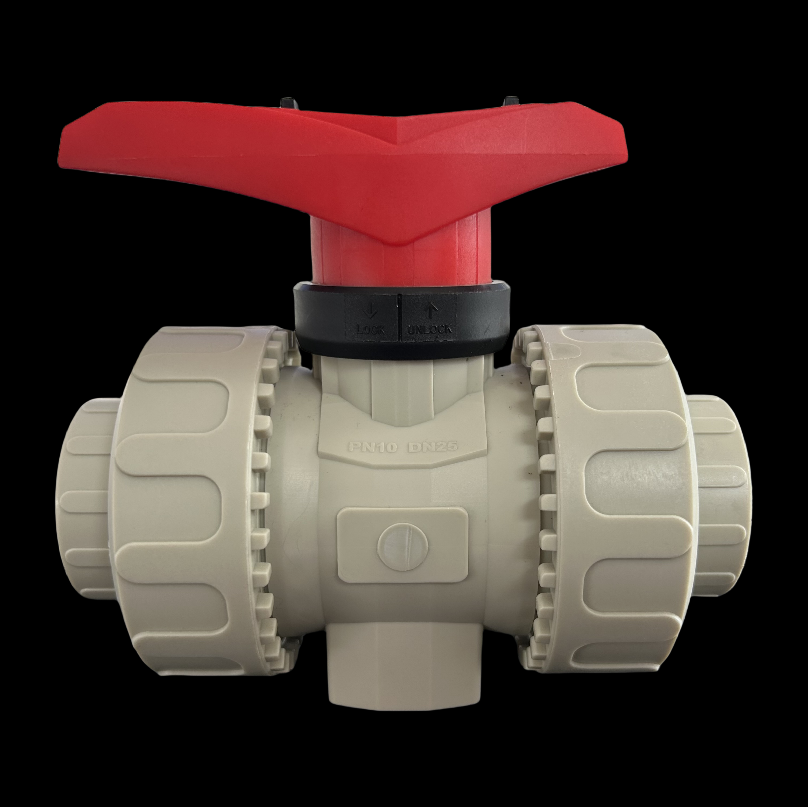
Material composition and purity require strict verification from your engineering team. You must verify the specific grade of Polypropylene Homopolymer listed on the document. Lower-cost quotes frequently rely on recycled resins to cut manufacturing expenses. Recycled plastics introduce harmful impurities into the valve body. These impurities create microscopic weak points. Under high pressure, these weak points eventually crack and cause catastrophic leaks.
Sealing mechanisms represent another critical comparison point for buyers. You must carefully compare quote details regarding PTFE seats and specific O-ring materials. Varying pressure and temperature conditions dictate these exact material choices. EPDM O-rings work exceptionally well for alkaline solutions. However, FPM (Viton) O-rings offer superior resistance against highly aggressive acids. Mismatched seals guarantee rapid system failures.
Connection types significantly impact your initial installation budget and timeline. Evaluate the quoted connection standards thoroughly. Options typically include flanged, threaded, or a dedicated socket weld ball valve. Flanged connections allow for easy modular replacement during routine maintenance. Socket welds provide a permanent, highly leak-resistant joint. Detail the installation realities and specific labor costs associated with each unique method.
We highly recommend mapping physical features directly to desired business outcomes. Do not just look at a mundane list of parts. Link physical design choices to their practical advantages. For example, a true union design allows for easy inline maintenance. The threaded collars let technicians remove the center block instantly. Technicians can service the internal components without disrupting the main pipe system. This design choice directly minimizes costly facility downtime.
| Sealing Material | Primary Chemical Compatibility | Optimal Temperature Range | Ideal Application Scenario |
|---|---|---|---|
| EPDM (O-ring) | Alkalis, weak acids, industrial water | -20°C to 120°C | Water treatment, basic chemical processing |
| FPM / Viton (O-ring) | Strong acids, halogens, hot oils | -10°C to 150°C | Aggressive acid handling, high-temp fluids |
| PTFE (Valve Seat) | Universal chemical resistance | -20°C to 200°C | High-friction continuous operation |
Decoding manufacturer markings helps buyers verify product authenticity easily. Guide your engineering team to check quotes for standard industry markings. Reliable manufacturers permanently mold specific performance data directly onto the valve body. These physical details confirm the delivered item matches the quoted specifications perfectly.
Essential markings to verify on your quotes include:
Testing protocols dictate the physical reliability of the finished product. Demand absolute transparency on factory testing procedures. You need to know if the quotes specify 100% hydro-testing or merely random batch testing. Every single valve should undergo rigorous water pressure testing before it leaves the facility. Batch testing leaves too much room for undetected manufacturing defects.
Certifications act as your primary shield against substandard products. Shortlist quotes explicitly listing compliance with international manufacturing standards. Look for ISO, DIN, and ANSI certifications relevant to chemical and industrial applications. These standards guarantee the manufacturer follows strict global engineering rules during assembly.
Trust always develops through verifiable operational transparency. Trustworthy suppliers readily provide Material Test Reports (MTRs) upon request. Vague claims like "high quality" or "premium grade" mean absolutely nothing without hard data. MTRs prove the chemical composition and physical properties of the raw resins used.
Evaluating the manufacturing partner holds just as much weight as evaluating the product itself. You must assess production scalability early in the procurement process. Determine if the PPH ball valve supplier has the actual capacity to handle a massive bulk valve order. Some vendors struggle to maintain batch consistency when production volumes suddenly spike. You need concrete assurances they can meet strict lead times without cutting corners.
Technical support and after-sales service separate excellent vendors from average ones. Evaluate the level of engineering support offered during the initial evaluation stage. Will they provide fluid dynamics consultation for your specific pipeline layout? Can they supply detailed 3D CAD models for your design team? Strong pre-sales engineering usually indicates highly reliable post-sales support.
Supply chain resilience remains a critical factor for large industrial projects. Investigate raw material sourcing practices carefully. You should also verify their primary manufacturing locations. This investigation helps you gauge risk exposure to global supply chain disruptions. A localized or diversified supply chain prevents unexpected delivery delays during shipping crises.
Warranty policies clearly define the supplier's confidence in their own products. Compare the fine print found in the competing quotations. Look specifically for defect replacement policies and detailed liability clauses. Determine who holds ultimate liability for operational failures. A comprehensive warranty covering chemical applications proves the vendor stands proudly behind their engineering.
Comparing drastically different quotations requires a highly structured approach. Standardizing your evaluation methodology eliminates emotional bias completely. It forces suppliers to compete on a perfectly level playing field. Follow this proven framework to select the best possible manufacturing partner for your upcoming project.
This systematic approach guarantees you select a partner capable of delivering long-term reliability. It actively protects your infrastructure investments from hidden operational vulnerabilities.
A submitted quotation always serves as a direct reflection of a manufacturer's operational maturity. Detailed proposals indicate rigorous internal quality controls and deep engineering expertise. Vague quotes often hide critical manufacturing shortcuts. We strongly advise buyers to prioritize verifiable technical data over the dangerous illusion of upfront savings. Evaluating long-term lifecycle expenses ensures your chemical pipelines remain completely safe and fully operational.
Take action today to secure your industrial infrastructure. We encourage buyers to download a standardized RFQ template to force vendors into transparent bidding. Alternatively, contact your internal engineering team for a transparent, no-obligation project assessment. Protecting your facility starts with demanding absolute clarity from every single supplier.
A: Differences usually stem from raw material purity, sealing ring quality (PTFE/FPM), and the rigor of factory pressure testing. Cheaper quotes often rely on recycled resins. They might also skip essential high-temperature stress tests to artificially lower their production costs.
A: It depends heavily on your pipeline infrastructure and specific maintenance needs. Socket welds offer permanent, highly leak-resistant joints ideal for dangerous chemicals. Conversely, flanged connections allow for much easier modular replacement during routine facility maintenance.
A: Demand official Material Test Reports (MTRs) from the manufacturer. You should also request independent third-party inspections from agencies like SGS. Finally, require a fully documented Factory Acceptance Test (FAT) protocol before authorizing the final shipment.
A: Not necessarily. Over-specifying can severely waste your procurement budget. The rating must align accurately with the system's specific operating temperature and chemical media. High temperatures naturally de-rate pressure capacities in all industrial plastic components.


