
close
Choose Your Site
Global
Social Media


Views: 0 Author: Site Editor Publish Time: 2026-08-18 Origin: Site


Selecting fluid and air line components represents a high-stakes engineering and procurement decision. Component failure rapidly leads to assembly line downtime, escalating warranty claims, and compromised equipment safety. OEMs constantly balance unit costs against strict operational tolerances. Moving from standard brass or metal fittings to engineered plastics relies entirely on supplier reliability. Engineered plastics like PA66 (Nylon 66) offer incredible performance benefits. However, a weak link in sourcing can disrupt your entire production schedule. We provide a clear, evidence-based framework for evaluating testing procedures. You will learn how to secure a dependable supply chain. We explore material validation, manufacturing capabilities, and procurement risk mitigation. This guide ensures your next sourcing decision strengthens your product reliability.
Briefly establish why OEMs transition to PA66. They want high vibration resistance, substantial weight reduction, and absolute corrosion immunity. Traditional metal components often rust. They add unnecessary weight to heavy equipment or commercial vehicles. PA66 solves these problems efficiently. It resists harsh chemicals and survives extreme environmental conditions. The polymer matrix absorbs vibrations naturally. This prevents structural fatigue over long operating cycles.
Define the exact application limits required before contacting a supplier. You must know your continuous operating temperatures accurately. Calculate the peak burst pressure under maximum system load. Identify media compatibility strictly. Fuel, engine coolant, and compressed air all interact differently with polymers. Chemical exposure dictates the exact grade of Nylon 66 required. Ignore these parameters, and component failure becomes inevitable.
Ensure the PA66 tube connector profile perfectly matches the mating hose. Nylon or polyurethane hoses possess specific durometer ratings. Mismatches cause micro-leaks under thermal cycling. The thermal expansion rates between the fitting and the hose must align closely. Rigid plastics paired with overly soft hoses invite immediate leak paths when temperatures fluctuate.
Discuss compressed air applications specifically. A robust pneumatic quick fitting must handle system pressure spikes safely. Verify these pressure ratings early during the design phase. Compressed air systems experience sudden pressure surges when valves open rapidly. The fitting must withstand these spikes without internal structural deformation.
Material Comparison Chart: PA66 vs. Brass
| Property | PA66 (Nylon 66) | Brass (Traditional) |
|---|---|---|
| Weight | Lightweight (Reduces system mass) | Heavy (Increases equipment load) |
| Corrosion Resistance | Excellent (Immune to rust) | Moderate (Prone to oxidation) |
| Vibration Dampening | High (Absorbs mechanical shock) | Low (Transfers shock to seals) |
| Thermal Conductivity | Low (Retains internal fluid heat) | High (Dissipates heat rapidly) |
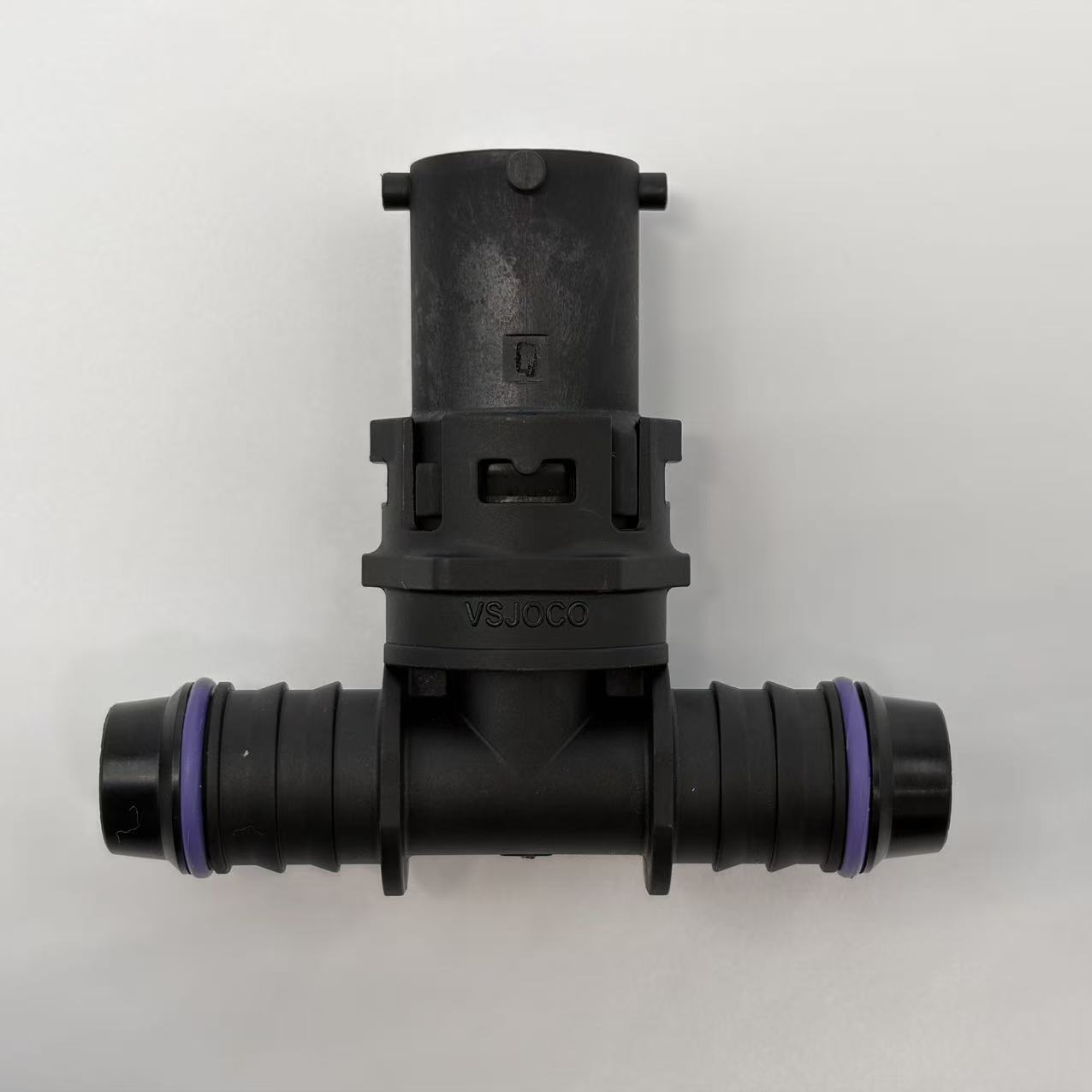
Assess whether the PA66 quick connector supplier owns the injection molding process in-house. Outsourcing introduces severe quality risks into your supply chain. In-house molding guarantees tighter dimensional tolerances. It ensures strict batch-to-batch consistency. Mold flow analysis, melt temperatures, and cooling times remain strictly controlled. Suppliers who control their own molding machines resolve defects much faster.
Request comprehensive documentation on raw resin sourcing. High-reliability applications demand virgin PA66. Often, engineers fortify this material using specific glass-fiber percentages. PA66 GF30 stands as a common standard for high-heat environments. Avoid inconsistent regrind materials entirely. Regrind polymers suffer from degraded molecular weights. They fail unpredictably under mechanical stress or high pressure.
Look for rigorous standard compliance. Demand ISO 9001 certification as a foundational baseline. Require IATF 16949 certification for any automotive or commercial vehicle projects. Evaluate their end-of-line testing protocols deeply. They should perform 100% automated pressure decay testing on assembled parts. Helium leak testing works well for highly sensitive gas applications. Visual inspections alone cannot guarantee seal integrity.
Confirm their capacity to scale production smoothly. They must scale from pilot batches of a few thousand to high-volume production of millions. This rapid scaling must not compromise defect per million opportunities (DPMO) targets. Ask for historical DPMO data during supplier audits. A reliable partner maintains single-digit DPMO even during peak production seasons.
Detail the regulatory and safety standards relevant to the fluid being transferred. Automotive fuels require strict SAE standards, like SAE J2044. Potable water or food-grade machinery demands strict FDA or NSF compliance. Verify these industry-specific certifications upfront. Missing certifications delay product launches significantly. Regulatory bodies will reject equipment utilizing non-compliant fluid transfer components.
The plastic body represents only half the engineering equation. A reliable OEM fluid connector must utilize appropriate internal sealing materials. You must specify seals like FKM, EPDM, or NBR precisely. They must match the chemical media and temperature extremes perfectly. FKM handles high-temperature fuels excellently. EPDM resists glycol-based coolants well. Using NBR for hot coolants leads to rapid seal degradation.
Review the supplier's pull-force test data thoroughly. Request vibration fatigue reports before granting engineering approval. The locking mechanism must not disengage under heavy equipment operational stress. Heavy machinery generates intense continuous vibration. Retaining clips and locking tabs must maintain their physical integrity over thousands of operational hours.
Analyze the cost-benefit of sourcing standard catalog parts versus investing in custom tooling. Standard parts offer faster delivery and zero tooling costs. Custom tools fit proprietary equipment footprints perfectly. Balance this decision carefully against your projected production volume. High-volume programs justify the initial capital expenditure for custom molds quickly.
Clarify contract terms regarding tool ownership if custom molds are required. Define tool ownership clearly in writing before issuing a purchase order. Establish a guaranteed shot life for the steel mold. Assign routine maintenance responsibilities explicitly. This prevents costly disputes later when a mold requires refurbishment or replacement.
Address geo-political and logistical risks proactively. Evaluate suppliers on their physical buffer stock policies. Check average lead times for raw PA66 resin deliveries. Look for secondary manufacturing locations to prevent line-down situations. Supply chain resilience ensures uninterrupted production schedules when global shipping bottlenecks occur.
Define the specific documentation to request alongside physical samples. Request updated material safety data sheets (MSDS) for all plastics and elastomers. Ask for comprehensive dimensional inspection reports. Demand Production Part Approval Process (PPAP) level 3 documentation if applicable. These documents prove manufacturing maturity. They demonstrate the supplier understands automotive-grade quality control.
Advise OEMs to run internal validation on shortlisted push-to-connect fitting samples. Do not rely solely on supplier testing data. Include rigorous thermal shock testing. Execute burst pressure testing at maximum operating heat. Conduct long-term fluid soak tests to verify chemical resistance. Real-world application testing often reveals weaknesses hidden during sterile lab tests.
Establish a clear framework for moving from a successful pilot run to a blanket purchase order. Define acceptable defect rates clearly within the final contract. Outline return merchandise authorization (RMA) procedures thoroughly. Detail how the supplier handles containment if defective parts somehow reach your assembly line. Swift containment protocols prevent massive product recalls.
Validation Testing Parameters Table
| Testing Phase | Methodology | Pass/Fail Criteria |
|---|---|---|
| Thermal Shock | Rapid cycling between -40°C and +120°C | No visible micro-fractures; maintains seal integrity |
| Burst Pressure | Hydrostatic pressurization at peak operating temp | Must exceed 3x standard operating pressure before failure |
| Chemical Soak | Submersion in specified fluid for 1000 hours | Less than 2% volume swell; zero embrittlement |
| Pull-Force | Mechanical axial load applied to mating tube | Locking mechanism holds beyond specified tensile limit |
Sourcing PA66 connectors stands as a highly strategic engineering partnership. It is never a simple commodity purchase. Your chosen supplier directly impacts your final product reliability. Establish stringent evaluation criteria early in the design phase.
Encourage procurement and engineering teams to align closely. They must agree on technical specifications and risk tolerances before finalizing contracts. Siloed decision-making often leads to catastrophic field failures. Cross-functional collaboration ensures both commercial and technical requirements are met.
Initiate this process by auditing current component failure rates. Identify the weakest links in your existing fluid transfer systems. Request detailed technical capabilities presentations from your shortlisted suppliers. Validate their claims through rigorous internal pilot testing before committing to mass production volumes.
A: Standard PA66 connectors typically operate reliably between -40°C and 120°C. Adding glass-fiber reinforcement pushes this thermal limit higher. Fortified PA66 GF30 often allows safe operation up to 140°C. Always verify specific temperature thresholds based on the exact material grade and fluid media used in your application.
A: Mixing them requires extreme caution. While PA66 prevents galvanic corrosion in surrounding components, surface hardness mismatches occur. Hard metal tubing might score the internal plastic retaining teeth. It may also fail to seal properly against the internal O-ring. Always validate tube surface finishes and hardness before mixing materials.
A: You must request comprehensive material certifications directly from the resin manufacturer. Implement strict batch traceability audits. During sample testing, perform structural analysis. Regrind materials often exhibit visual imperfections, inconsistent color matching, and significantly lower tensile strength during destructive burst testing compared to pure virgin PA66.
A: Custom connector timelines vary heavily based on internal complexity. Initial design and prototyping typically take 2 to 4 weeks. Tooling fabrication requires another 4 to 8 weeks. PPAP approval and sample validation add 2 to 4 weeks. Expect a total lead time of 10 to 16 weeks before mass production begins.


