
close
Choose Your Site
Global
Social Media


Views: 0 Author: Site Editor Publish Time: 2026-07-25 Origin: Site


Engineers select Polyvinylidene Fluoride (PVDF) for highly corrosive, ultra-pure, or high-temperature applications. A leak in these demanding environments is never just a minor nuisance. It represents severe safety hazards, environmental contamination, or costly operational downtime. Despite the high material resilience of PVDF, threaded connections remain a frustratingly common point of failure. PVDF components cost significantly more than standard plastics, raising your expectations for flawless performance. Many facility managers wonder why top-tier piping systems still develop unexpected drips at the joints. They face immense pressure to keep operations running safely without hazardous spills. This article moves past basic plumbing advice to technically analyze why these specific fluoropolymer joints fail in the field. We will explore how you can correct underlying installation errors and establish strict, repeatable assembly protocols. Finally, you will learn exactly when to transition your critical systems to alternative joining methods for permanent leak prevention.
Material properties matter: PVDF’s natural lubricity and susceptibility to "cold flow" (creep) make traditional torque-and-forget plumbing techniques ineffective.
Installation errors dominate: Over-torquing causes micro-fractures in the female thread, while improper sealant choice leads to chemical degradation or thread galling.
Systemic stress causes delayed leaks: Thermal cycling and vibration will loosen threaded PVDF over time.
Evaluation alternative: High-risk or high-pressure systems should often bypass threads entirely in favor of a butt weld adapter.
We must understand polymer science to prevent joint failure. Plastics behave quite differently than brass or steel. When subjected to continuous mechanical stress, polymers exhibit a phenomenon known as cold flow. Engineers also call this process creep. As you tighten a joint, the threads apply constant, heavy pressure against each other. Over time, the PVDF material slowly deforms to relieve this internal stress. This subtle shifting ultimately compromises the tight physical barrier. Fluids then easily bypass the seal.
Beyond cold flow, inherent lubricity plays a highly deceptive role. PVDF possesses a remarkably low friction coefficient. This slickness often tricks installers during manual assembly. The wrench resistance feels much lower compared to turning metal or rigid PVC pipes. Consequently, technicians naturally apply extra force. This over-tightening strains the polymer matrix far beyond its structural yield point.
Temperature fluctuations introduce another severe mechanical challenge. Thermal expansion rates for fluoropolymers significantly exceed those of standard metals. When mating plastic pipes to metal valves, temperature spikes cause the PVDF to expand rapidly. It pushes outward against the rigid metal barrier. As the system eventually cools, the plastic contracts. However, it may not return perfectly to its original molded shape. This cyclic expansion and contraction repeatedly breaks the micro-seal created by tape. You will inevitably experience threaded fitting leakage if you ignore these thermal dynamics.
Even highly skilled pipefitters encounter issues when working with advanced plastics. Understanding the most frequent field errors helps you prevent catastrophic failures in your PVDF threaded pipe fittings.
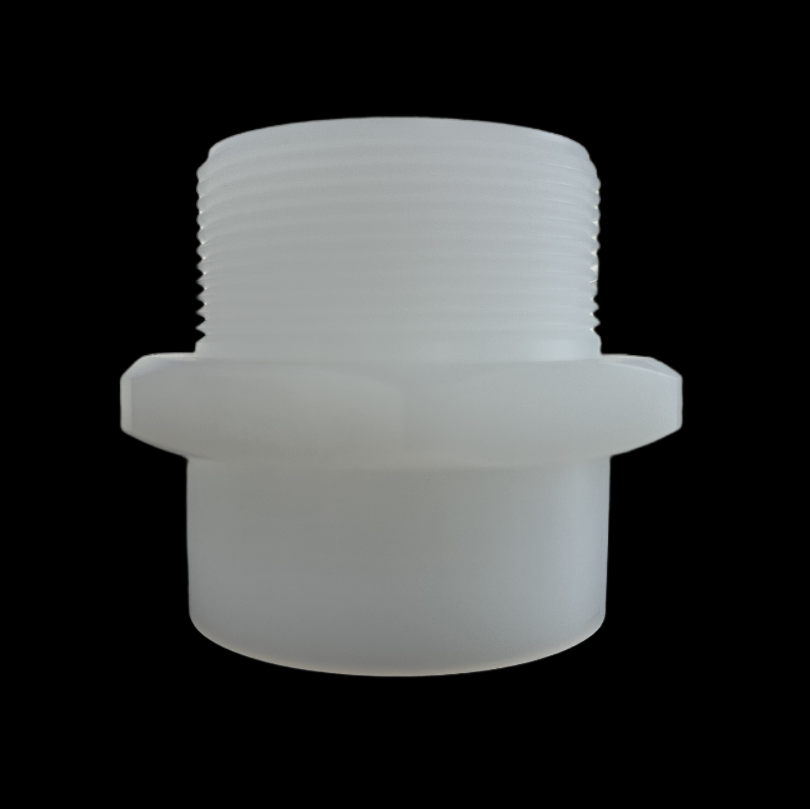
Precision manufacturing matters immensely for fluid control. A frequent issue arises when you pair a low-quality PVDF male fitting with a high-tolerance PVDF female fitting. If the thread angles or pitch depths do not align perfectly, they create a poor interference fit. The fluid easily navigates through the microscopic gaps between the poorly mated ridges. Always source components manufactured strictly to standardized NPT (National Pipe Thread) or BSP specifications to ensure snug, reliable engagement.
The actual implementation of assembling plastic pipe often defies conventional plumbing wisdom. Installers frequently assume tighter means safer. However, exceeding one to one-and-a-half turns past hand-tight dramatically increases radial stress. This excessive torque forces the tapered male end deeper like a mechanical wedge. It splits the female component outward from the inside. This action creates an invisible micro-crack in the housing. The tiny fracture may hold during initial hydrostatic testing. Unfortunately, it will invariably leak once the line reaches full operating pressure and temperature.
The ongoing debate between using PTFE tape versus paste creates widespread confusion. Standard anaerobic pipe dopes often contain volatile solvents or oils. These chemicals can chemically degrade the polymer. They also act as extreme lubricants. When the paste lubricates the joint excessively, the threads bottom out far too easily. The technician strips the connection entirely without realizing it. You must select specifically formulated, chemically compatible sealants. High-density PTFE tape generally offers the safest and most reliable seal for these specific industrial plastics.
PVDF possesses incredible tensile strength, but it remains susceptible to physical damage during initial assembly. If a technician slightly misaligns the pipe upon insertion, the harder leading edge cuts new, incorrect grooves. It destroys the softer internal plastic threads. Cross-threading permanently ruins the expensive component. Because these parts serve critical, high-purity applications, you cannot simply force them back into proper alignment. You must discard and replace any cross-threaded part immediately.
When a fluid system fails, your immediate response dictates the extent of the facility damage. You must follow strict safety protocols to secure the area. Then, you can diagnose the root cause accurately.
Personnel safety remains the absolute top priority. Always initiate standard operating procedures for safely depressurizing your lines. Drain chemical or high-purity systems completely into designated containment vessels. Never attempt to tighten an active, fully pressurized joint. Once you isolate the system, unthread the leaking section carefully. Clean the area thoroughly using approved solvents or deionized water to remove residual chemicals and old sealant remnants.
Examine the disassembled components closely under bright lighting. You are looking specifically for thread elongation, root stretching, or mechanical galling. Run your bare fingernail along the threads. If the sharp ridges feel flattened or rolled over, the structural integrity has failed. We follow a strict rule of thumb in fluid handling: once a polymer thread stretches, you must replace it. You cannot simply apply more tape to a damaged joint and expect it to hold under pressure.
If your inspection confirms the threads remain pristine, you can attempt re-assembly. Implement these strict guidelines to ensure success:
Proper Sealant Application: Use heavy-duty, high-density PTFE tape formulated specifically for aggressive chemicals. Wrap the tape precisely three times in the same direction the threads turn.
Controlled Tightening: Define strict torque limits for all maintenance staff. Rely entirely on non-marring strap wrenches for the final mechanical turns.
Avoid Damaging Tools: Never use traditional metal pipe wrenches with sharp teeth. These aggressive tools will gouge and score the exterior plastic. This damage creates stress risers that lead to future catastrophic failures.
If a facility experiences recurrent leaks due to high pressure, water hammer, or severe thermal cycling, threads are simply the wrong choice. Engineers must recognize when daily operational demands exceed the physical limitations of mechanical threads.
When operational reliability is non-negotiable, industry standards dictate upgrading the physical connection. Introducing a butt weld adapter serves as the permanent solution for high-stress nodes. Fusion welding entirely eliminates the mechanical gaps where fluid typically escapes. It creates a single, continuous polymer structure.
Evaluate your system architecture using the following criteria to determine the absolute best joining strategy.
Feature | Threaded Joints | Butt Welding (IR or Socket) |
|---|---|---|
Installation Speed | Fast to assemble and requires only basic hand tools. | Slower process requiring specialized heating equipment. |
System Modification | Easy to unscrew, modify, or expand the layout later. | Permanent structure; requires cutting the pipe to make changes. |
Vulnerability | High risk from human error, over-torquing, and system vibration. | Seamless connection and essentially immune to mechanical vibration. |
Purity and Flow | Crevices can harbor bacteria or trap trace aggressive chemicals. | Creates a zero-dead-volume joint perfectly ideal for ultra-pure water. |
Stringent regulatory environments heavily favor welded systems over mechanical threads. In demanding sectors like semiconductor manufacturing or FDA-regulated pharmaceutical production, microscopic contamination ruins entire product batches. Welded adapters eliminate the dark crevices normally associated with threads. This drastically reduces biological contamination risks. Welds provide a smooth, continuous interior surface that actively prevents the dangerous buildup of aggressive acids or bacterial growth.
Your leak prevention strategy actually begins long before physical installation. Procuring substandard components guarantees system failure regardless of your assembly skills. You must vet your materials rigorously.
Buyers must aggressively verify raw material sources. Quality fittings are molded directly from 100% virgin PVDF resin. Some lower-tier manufacturers mix in regrind (recycled plastic) to lower their production costs. Regrind severely compromises the tensile strength and chemical resistance of the final product. It makes the thread ridges brittle and highly susceptible to snapping under torque. Always demand formal documentation proving virgin resin usage.
Structural reliability varies wildly based on how the manufacturer forms the threads.
Injection-Molded Threads: Factories form these directly during the initial molding process. They typically feature a continuous, unbroken polymer chain structure. This offers superior strength and a remarkably smoother finish.
Machined Threads: Technicians cut these into a solid molded blank post-production. The aggressive cutting process severs the polymer chains. It creates microscopic structural weaknesses and a rougher surface that severely increases friction during assembly.
For critical chemical lines, injection-molded threads provide noticeably better long-term performance and peace of mind.
Establish strict shortlisting logic for all B2B procurement. Do not purchase critical infrastructure solely based on the lowest bid. Demand full batch traceability. You need this to track any failed part back to its specific manufacturing run. Request certified pressure rating documents tailored specifically for the temperature ranges your facility operates within. Finally, ensure the vendor provides clear, accessible technical support regarding sealant compatibility to prevent accidental chemical degradation.
Leaks in PVDF threaded joints are rarely a fundamental material failure. They are almost exclusively the direct result of improper installation techniques, wrong sealant choices, or misapplied joint types for the specific operating conditions. By understanding the mechanics of cold flow and thermal expansion, you can dramatically improve your connection reliability across the facility.
Audit your current leaking joints immediately. Look closely for visual signs of over-torquing and cross-threading. If your standardized re-assembly protocol fails to secure the seal, do not force the issue. We highly recommend consulting with a dedicated piping engineer to source precision-molded replacements. For critical fluid lines experiencing frequent thermal cycling or extreme high pressure, upgrade your system by specifying welded adapters to achieve a permanent, leak-proof solution.
A: No. Many standard pipe dopes contain oils or solvents that can degrade PVDF or act as an extreme lubricant, leading to over-tightening. Only use chemically compatible PTFE tape or specialized non-hardening fluoropolymer pastes.
A: Metal threads do not yield. Forcing a tapered metal male thread into a plastic female thread causes immense hoop stress, splitting the PVDF. Always use a transition fitting or a metal-reinforced female adapter.
A: Yes, virgin PVDF is non-toxic, biologically inert, and heavily used in ultra-pure water systems. However, users must ensure the thread sealant used is also food-safe/reef-safe and free of biocides.
A: Industry best practice is strictly "finger-tight plus one to one-and-a-half turns" with a strap wrench. Further tightening dramatically increases the risk of thread failure.


