
close
Choose Your Site
Global
Social Media


Views: 99 Author: Site Editor Publish Time: 2026-05-29 Origin: Site


PFA and FEP are both fluoropolymer tubing materials used in chemical processing, semiconductor fluid handling, laboratory systems, manufacturing equipment, and corrosion-resistant piping layouts. Although they share many advantages, their performance boundaries are different, especially in temperature resistance, chemical stability, mechanical strength, flexibility, transparency, and cost. A PFA Fluoropolymer Tube is often selected for aggressive chemicals, high-purity fluids, and high-temperature service, while FEP tubing is often chosen for flexible routing, visual monitoring, and cost-sensitive operating conditions.
● PFA offers higher temperature resistance than FEP.
● FEP provides better flexibility, transparency, and processing convenience.
● A PFA Fluoropolymer Tube is preferred for aggressive chemicals and high-purity fluid systems.
● FEP tubing is suitable for moderate-temperature and cost-sensitive applications.
● Material selection should consider temperature, chemical exposure, pressure, purity, installation layout, and total operating cost.
● A PFA Fluoropolymer Tube is usually the stronger option when long-term reliability is more important than initial material cost.
A PFA Fluoropolymer Tube is made from perfluoroalkoxy material, a melt-processable fluoropolymer known for excellent chemical resistance and high thermal stability. Compared with many general plastics, a PFA Fluoropolymer Tube maintains stronger dimensional stability when exposed to corrosive fluids, elevated temperatures, and repeated cleaning cycles. In high-purity or aggressive media systems, a PFA Fluoropolymer Tube is commonly used where contamination control, chemical compatibility, and long-term sealing reliability are critical.
FEP tubing is made from fluorinated ethylene propylene, a fluoropolymer with good chemical resistance, strong transparency, and easier processing than PFA. FEP has a lower melting point, which makes it easier to form into complex shapes and flexible tubing layouts. However, when compared with a PFA Fluoropolymer Tube, FEP generally has a lower continuous service temperature and weaker high-temperature mechanical stability.
PFA and FEP are often compared because both belong to the fluoropolymer family and both are used in systems that require clean, corrosion-resistant fluid transfer. A PFA Fluoropolymer Tube and FEP tubing may appear similar in appearance, but their operating limits can be very different under heat, pressure, or aggressive chemical exposure. The better material depends on whether the system prioritizes high-temperature durability, chemical resistance, flexibility, visibility, or cost control.

A PFA Fluoropolymer Tube generally supports continuous service temperatures up to around 260°C, making it suitable for high-temperature chemical transfer and thermal cycling systems. FEP tubing usually supports continuous service temperatures around 200°C, which is sufficient for many moderate-temperature fluid lines but less suitable for severe heat exposure. If a system operates near the upper thermal limit of FEP, a PFA Fluoropolymer Tube provides a wider safety margin.
A PFA Fluoropolymer Tube offers excellent resistance to a broad range of acids, alkalis, solvents, oxidizers, and corrosive process chemicals. FEP also has good chemical resistance, but PFA is typically preferred where chemical concentration, temperature, and exposure duration create a more demanding environment. For chemical transfer involving strong corrosive media, a PFA Fluoropolymer Tube can reduce the risk of swelling, degradation, or premature tubing failure.
A PFA Fluoropolymer Tube usually retains stronger mechanical properties under high-temperature conditions than FEP tubing. This difference becomes important when tubing must resist pressure fluctuation, vibration, clamping force, or repeated system operation. FEP is more flexible, but a PFA Fluoropolymer Tube is often more stable in applications where mechanical strength and temperature resistance must work together.
FEP tubing has advantages in flexibility, optical clarity, and thermoplastic processing, which makes it useful for systems requiring visible fluid flow or tight routing. A PFA Fluoropolymer Tube can also be formed and installed in many equipment layouts, but it is generally less flexible and more expensive than FEP. If the application does not involve high temperature or highly aggressive media, FEP may provide a practical balance between performance and cost.
Performance Factor | PFA Fluoropolymer Tube | FEP Tubing | Preferred Option |
Continuous temperature resistance | Up to around 260°C | Up to around 200°C | PFA |
Chemical resistance | Excellent in aggressive media | Very good in many media | PFA |
High-temperature mechanical stability | Stronger | Lower than PFA | PFA |
Flexibility | Good | Better | FEP |
Transparency | Good | Excellent | FEP |
Processing convenience | More demanding | Easier | FEP |
Cost efficiency | Higher cost | Lower cost | FEP |
High-purity fluid use | Excellent | Good | PFA |
In chemical processing systems, a PFA Fluoropolymer Tube is commonly chosen when tubing must handle acids, alkalis, solvents, or mixed chemical streams under demanding conditions. FEP tubing may be suitable for less aggressive chemicals or lower-temperature transfer lines, but it should not be selected only by appearance or general fluoropolymer classification. A PFA Fluoropolymer Tube is more appropriate when the chemical medium, concentration, and temperature create a higher corrosion risk.
A PFA Fluoropolymer Tube is widely used in high-purity fluid handling because it offers strong chemical stability and low contamination risk. Semiconductor processes, electronic chemicals, ultrapure water lines, and precision cleaning systems often require tubing that can maintain purity during continuous operation. In these applications, a PFA Fluoropolymer Tube is usually preferred over FEP when purity control and long-term chemical resistance are essential.
Laboratory and analytical equipment often requires tubing that can handle reagents, cleaning liquids, and controlled fluid samples with stable performance. FEP tubing is useful when transparency and flexibility are more important than high-temperature operation. A PFA Fluoropolymer Tube becomes more suitable when the system uses aggressive reagents, elevated temperatures, or sensitive fluid paths where tubing degradation could affect testing consistency.
FEP tubing is often selected for industrial fluid systems where the chemical environment is moderate, the temperature is controlled, and budget pressure is significant. A PFA Fluoropolymer Tube has a higher initial cost, but it can be more economical in severe applications if it reduces shutdowns, leakage risk, or replacement frequency. The correct decision should compare not only purchase price but also operating risk, maintenance schedule, and process stability.
Application Condition | Recommended Tubing | Main Reason |
High-temperature chemical transfer | PFA Fluoropolymer Tube | Better thermal stability |
Strong acid or solvent handling | PFA Fluoropolymer Tube | Stronger corrosion resistance |
Semiconductor chemical delivery | PFA Fluoropolymer Tube | High purity and chemical stability |
Ultrapure water systems | PFA Fluoropolymer Tube | Lower contamination concern |
Visual fluid monitoring | FEP tubing | Higher transparency |
Tight and flexible routing | FEP tubing | Better flexibility |
Moderate chemical exposure | FEP tubing | Balanced performance and cost |
Long-term severe service | PFA Fluoropolymer Tube | Higher reliability margin |
Operating temperature should be reviewed before comparing other tubing properties because heat can change material strength, flexibility, and service life. If the system temperature approaches or exceeds the practical range of FEP, a PFA Fluoropolymer Tube is the safer technical choice. Temperature spikes, cleaning cycles, sterilization steps, and heated chemical transfer should all be considered before replacing a PFA Fluoropolymer Tube with FEP.
Chemical compatibility must be evaluated according to fluid type, concentration, temperature, exposure time, and cleaning procedures. A PFA Fluoropolymer Tube is generally stronger for aggressive acids, solvents, oxidizers, and corrosive mixtures, but actual compatibility should still be confirmed for each operating condition. FEP may perform well in many environments, but a PFA Fluoropolymer Tube is usually more suitable when chemical attack would create serious process or maintenance risk.
Tubing selection should include pressure range, pressure pulses, bending radius, vibration, clamping points, and external mechanical loads. A PFA Fluoropolymer Tube is often selected for systems where temperature and pressure act together, because mechanical stability becomes more important under heat. FEP tubing can be practical for low-pressure or flexible layouts, but a PFA Fluoropolymer Tube offers greater confidence in harsher service conditions.
FEP tubing usually has a lower initial material cost, which makes it attractive for moderate-duty systems. A PFA Fluoropolymer Tube costs more, but it may reduce long-term risk in systems where leakage, contamination, chemical damage, or downtime would be expensive. For critical fluid systems, selecting a PFA Fluoropolymer Tube can be a performance-based decision rather than a simple material upgrade.
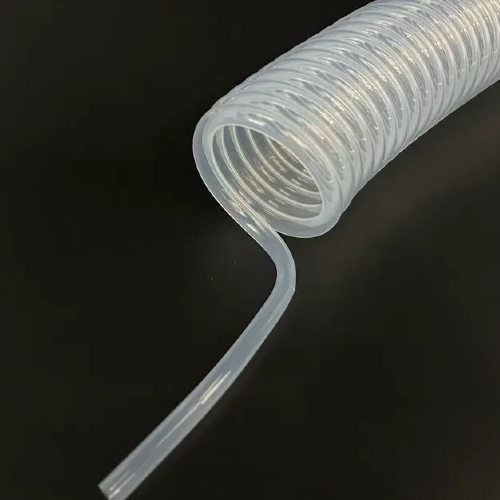
A PFA Fluoropolymer Tube should be selected when the system involves high temperature, aggressive chemicals, high-purity fluids, or long operating cycles. It is also suitable when tubing failure could cause contamination, leakage, process interruption, or frequent maintenance. In severe applications, a PFA Fluoropolymer Tube provides a stronger combination of chemical resistance, thermal resistance, and mechanical stability.
FEP tubing is a suitable choice when the system operates at moderate temperatures and requires strong flexibility, transparency, and cost efficiency. It performs well in many fluid handling applications where chemical exposure is not extreme and pressure requirements are not severe. Compared with a PFA Fluoropolymer Tube, FEP is easier to process and route, making it practical for compact equipment and visible flow lines.
FEP should not replace a PFA Fluoropolymer Tube in systems where temperature, chemical concentration, or purity requirements exceed FEP’s stable operating range. Substitution may reduce upfront cost, but it can increase the risk of deformation, chemical damage, leakage, or shortened service life. If the original specification calls for a PFA Fluoropolymer Tube because of high-risk operating conditions, material substitution should be reviewed carefully.
If the System Requires | Better Choice |
Continuous high-temperature operation | PFA Fluoropolymer Tube |
Strong chemical corrosion resistance | PFA Fluoropolymer Tube |
High-purity fluid transfer | PFA Fluoropolymer Tube |
Better transparency | FEP tubing |
Better flexibility | FEP tubing |
Lower material cost | FEP tubing |
High-temperature pressure stability | PFA Fluoropolymer Tube |
Moderate-duty general fluid transfer | FEP tubing |
PFA and FEP tubing are both valuable fluoropolymer solutions, but they are not interchangeable in every fluid system. FEP tubing is suitable for flexible, transparent, and cost-sensitive applications, while a PFA Fluoropolymer Tube is usually the stronger option for high-temperature, aggressive chemical, high-purity, and long-service fluid transfer. For projects involving PFA Fluoropolymer Tube selection, corrosion-resistant tubing, or compatible pipeline connection components, VSJOCO Zixing Yuguang Pipeline System Co., Ltd. provides practical pipeline connection solutions for demanding fluid system requirements.
PFA is better than FEP when the application requires higher temperature resistance, stronger chemical resistance, and better high-temperature mechanical stability. A PFA Fluoropolymer Tube is commonly selected for aggressive chemical transfer, semiconductor fluid handling, and high-purity systems. FEP can still be better for applications that prioritize flexibility, transparency, easier processing, and lower cost.
A PFA Fluoropolymer Tube is used for chemical transfer, high-purity fluid delivery, semiconductor processing, laboratory equipment, pharmaceutical fluid handling, and corrosion-resistant piping systems. It is especially useful where tubing must resist aggressive chemicals, elevated temperatures, and contamination-sensitive operating conditions. A PFA Fluoropolymer Tube is often selected when long-term stability is more important than minimum material cost.
FEP tubing can replace PFA in some moderate-temperature and less aggressive fluid systems if the chemical, pressure, and installation conditions are suitable. However, FEP should not replace a PFA Fluoropolymer Tube in high-temperature, high-purity, or strongly corrosive applications without technical review. If the system specification depends on the higher performance margin of a PFA Fluoropolymer Tube, direct substitution may increase operating risk.


