
close
Choose Your Site
Global
Social Media


Views: 0 Author: Site Editor Publish Time: 2026-07-29 Origin: Site


Industrial fluid handling often demands swift transitions between varying pipe diameters. You must accomplish this without jeopardizing chemical resistance, pressure ratings, or structural integrity. Standard transition fittings often fail under extreme stress. They degrade quickly when exposed to harsh chemicals. This degradation leads to costly downtime and hazardous chemical spills. Using standard transition fittings in aggressive chemical, high-temperature, or ultra-pure applications introduces weak points. They form potential leak paths and elevate contamination risks significantly.
Polyvinylidene Fluoride components solve these engineering challenges effectively. Specifically, they provide a standardized, high-performance method for stepping down sizes in critical piping networks. Evaluating the correct joining method and sizing standard remains critical for long-term system reliability. Proper engineering prevents these catastrophic failures from occurring. In this guide, you will learn how these transition components integrate into complex industrial setups. We will examine the exact sizing standards required for seamless integration. You will discover the optimal thermal fusion techniques utilized by industry professionals. We will also dissect vital compliance metrics needed for regulatory approval. By the end, you will understand how to secure long-term system reliability seamlessly.
A PVDF bushing bridges different pipe diameters by fitting inside a larger fitting and accepting a smaller pipe, minimizing the spatial footprint of the transition.
Socket fusion is the industry standard for high-purity and aggressive chemical applications, offering superior joint integrity compared to threaded connections.
Accurate specification requires aligning the bushing with the existing system's dimensional standards (e.g., ISO metric vs. ASTM Schedule 80) and adjusting pressure ratings based on operational temperatures.
Proper installation requires strict adherence to heating and cooling protocols to prevent stress fractures and maintain the material's mechanical strength.
Fluid velocity and pressure requirements regularly dictate diameter changes across processing lines. Standard transitions easily create dead legs within the piping network. These dead legs trap hazardous fluids. They can also cause excessive flow restriction during peak operation. When fluids pass through a sudden restriction, turbulence spikes immediately. This turbulence degrades flow efficiency and increases mechanical wear on the system.
A reducing bushing solves this issue effectively. It acts as a flush or near-flush insert within the pipeline. The component reduces the inner diameter of an existing fitting, like a tee or elbow. It accepts a smaller pipe directly. This mechanism functions as an incredibly compact pipe size adapter. The internal geometry guides the fluid gently into the smaller diameter. It minimizes flow disruption compared to abrupt face transitions.
Engineers choose this specific fluoropolymer over PP, PVC, or PTFE for very specific reasons. Critical applications often demand high tensile strength alongside extreme chemical resistance. The material handles halogens and strong acids effortlessly. It also sustains operational temperatures up to 140°C (285°F) without deforming or losing structural integrity.
By specifying a matching PVDF pipe reducer, you maintain a completely homogeneous pipeline. This uniform material base proves critical for long-term safety. It ensures predictable thermal expansion rates across the network. It also delivers uniform chemical defense across the entire manufacturing line. Mixing materials often leads to differential expansion, which eventually tears joints apart.
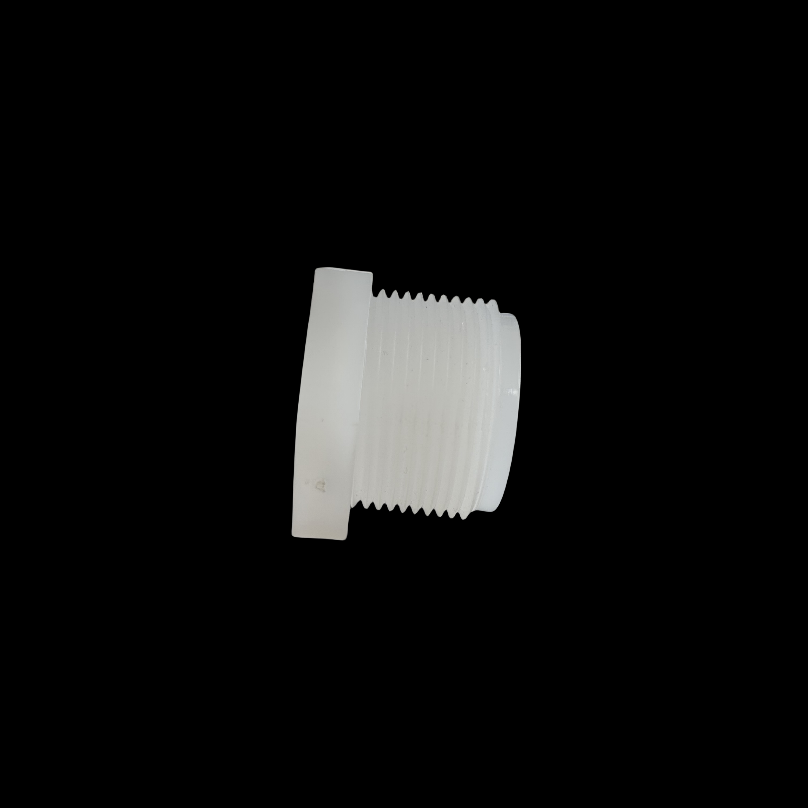
Piping integrity heavily depends on the chosen joining technique. Socket fusion remains the dominant choice for critical networks. Both the exterior of the pipe and the interior of the bushing undergo simultaneous heating. Technicians use dedicated heating irons for this step. The surfaces reach their precise melting point quickly. They are then joined together seamlessly. Upon cooling, they form a single, homogenous piece of solid plastic.
The main success criterion here is creating absolute zero-leak pathways. This characteristic makes fusion essential for high-purity semiconductor lines. It is equally mandatory for aggressive chemical processing facilities. However, distinct limitations exist. Socket fusion requires specialized heating tools. You need precise temperature control throughout the process. Technicians also need specific spatial clearances during installation. Tight corners make fusion incredibly difficult to execute properly.
Alternatively, threaded connections offer straightforward mechanical engagement. They utilize tapered threads like NPT or BSP standards. You must use high-density PTFE tape or highly compatible thread sealants. The success criteria lean heavily toward lower-pressure applications. Threads work exceptionally well for temporary installations. They also facilitate transitions to dissimilar materials, such as metal instrumentation valves.
The implementation risk involves inherent stress concentrators within the thread grooves. Over-tightening leads directly to micro-fractures in the polymer matrix. This catastrophic failure occurs most frequently under active thermal cycling. As the system heats and cools, the metal and plastic components expand at different rates. This movement grinds the threads and causes premature leaks.
Connection Type | Primary Mechanism | Ideal Application | Main Limitation |
|---|---|---|---|
Socket Fusion | Thermal welding to melting point | High-purity, aggressive chemicals | Requires specialized tools and clearance space |
Threaded (NPT/BSP) | Mechanical tapered thread engagement | Lower pressure, dissimilar materials | Susceptible to thermal cycling stress |
Butt Welding | Direct end-to-end thermal fusion | Large diameter mainlines | Requires highly precise pipe alignment |
Evaluating a chemical pipe adapter demands strict adherence to system dimensions. Mismatched components cause immediate installation failures. A Schedule 80 component will never seamlessly integrate into an ISO metric SDR system. The wall thicknesses differ dramatically between these standards. You must employ proper conversion adapters to cross dimensional standards safely.
Standard Dimension Ratio (SDR) dictates the relationship between pipe diameter and wall thickness. If you force a mismatch, the internal bores will not align perfectly. This misalignment creates a small lip inside the pipeline. Over time, aggressive chemicals erode this lip. This erosion weakens the joint and eventually causes a blowout.
Next, you must clarify the physical geometry regarding spigot versus socket sizing. This trips up many junior installers. The outer diameter (OD) of the bushing must perfectly match the inner diameter (ID) of the primary fitting. Simultaneously, its internal ID must match the OD of the incoming smaller pipe. Precision is non-negotiable here.
Temperature and pressure derating represent another critical evaluation lens. The material maintains robust mechanical integrity at highly elevated temperatures. However, its absolute pressure capacity decreases linearly as temperatures rise above ambient levels. Engineers must calculate the network's maximum operating pressure at its absolute peak temperature. You must guarantee the chosen PVDF bushing meets or exceeds this derated value. Always reference manufacturer-specific pressure-temperature curves for exact figures. Guessing these values leads directly to pipeline ruptures.
Preparation dictates the ultimate success of your weld. For fusion systems, precise pipe cutting remains absolutely non-negotiable. Cuts must be perfectly square every single time. Chamfering the external edges is equally important to prevent material push-back during insertion. Any contamination on the fusion surfaces compromises the entire weld. You must eliminate all dust, moisture, and cutting oils before applying heat.
Thermal control requires immense precision from the operator. Welding these fluoropolymers demands higher temperatures than standard polyolefins. Typical heating ranges fall strictly between 250°C and 270°C. Heating times vary based strictly on the pipe diameter. A small transition might require only five seconds of heat. Conversely, a larger transition demands significantly longer exposure. Deviating from manufacturer-specified heating times causes severe structural issues. Underheating leads directly to weak cold welds. Overheating results in thermally degraded, brittle material.
Cooling protocols demand strict patience. Forced cooling utilizing water or compressed air introduces massive internal stress. Joints must cool naturally to ambient room temperature. This natural cooling phase allows the polymer chains to realign. It ensures the joint achieves its full mechanical strength safely.
Stress cracking prevention matters deeply in industrial setups. Particularly with threaded configurations, you must avoid incompatible sealants. Standard pipe dopes cause chemical stress cracking rapidly in fluoropolymers. Always verify sealant compatibility beforehand.
Best Practice: Always wipe fusion zones using 90% or higher isopropyl alcohol before heating to remove unseen oils.
Common Mistake: Rushing the cooling process with wet rags, which severely weakens the joint's structural integrity.
Best Practice: Use dedicated, ratcheting pipe cutters to ensure a perfectly square cut every single time.
Common Mistake: Over-torquing threaded joints past the recommended "finger-tight plus one-half turn" guideline.
Rigorous quality assurance ensures long-term operational safety. A verifiable component should conform strictly to established industry benchmarks. Two primary standards dominate this specialized manufacturing space. ASTM D3222 dictates the exact quality of the base resin. It tests for specific gravity, melt flow rates, and tensile strength. ISO 10931 governs industrial fluoropolymer piping systems globally. It ensures dimensions and pressure tolerances remain uniform across different brands.
Purity matters heavily in sensitive manufacturing sectors. If you evaluate components for life sciences, food processing, or ultrapure water, verify the manufacturing baseline. The component must utilize natural, unpigmented resin exclusively. Pigments can leach into sensitive fluid streams over time. The part should also hold relevant FDA or NSF 61 certifications for safe contact with consumables.
System testing finalizes the entire installation phase safely. Post-installation, the network should undergo a rigorous hydrostatic pressure test. Operators typically conduct this test at 1.5 times the normal operating pressure. To perform a proper test, fill the line slowly from the lowest point. This purges trapped air through high-point bleed valves. Hold this pressure for at least one hour while inspecting every joint visually. Always use water for this specific procedure. Never use compressed gas due to severe explosion risks. Furthermore, only initiate testing after the required curing time fully elapses.
Selecting the perfect component requires a highly systematic approach. Relying on guesswork compromises system integrity rapidly. Use the following application checklist to guide your final specification process accurately:
Identify the exact chemical media passing through the line and its maximum concentration percentage.
Determine the peak operating temperature and the required system pressure at that specific thermal state.
Verify the existing piping dimensional standard, such as Metric, Schedule 40, or Schedule 80.
Select the required connection type based on spatial and purity needs, like Socket, Butt, or Threaded.
Vendor evaluation ensures reliable long-term procurement. Prioritize suppliers who provide comprehensive technical datasheets upfront. They should offer full material traceability for every single part. This includes providing specific batch and lot numbers upon delivery. They must also supply precise temperature-derating charts tailored to their unique resin blends. Not all formulations behave exactly the same under extreme stress.
For your next steps, consult with a specialized piping engineer early in the design phase. You can also engage the manufacturer's technical support team directly. Good vendors act as engineering partners, not just parts suppliers. They help you analyze complex fluid behaviors. They assist in calculating thermal expansion loops if your pipeline traverses varying temperature zones. They will validate your selections against specific fluid flow dynamics to ensure long-term viability. Proactive consultation prevents costly teardowns later.
Connecting different pipe sizes safely in aggressive environments requires careful planning. It demands much more than picking a simple adapter off a shelf. When correctly sized, specified, and fused, these components ensure diameter transitions never become system liabilities. Consider these final action-oriented steps before finalizing your system upgrade:
Audit your existing network's dimensional standards rigorously to prevent mismatched connections.
Calculate your maximum derated pressure requirements based on peak thermal loads rather than ambient conditions.
Verify your installation team possesses the correct tooling and training for proper fluoropolymer fusion protocols.
Request full material traceability and compliance certificates from your chosen vendor before finalizing the purchase.
A: Direct thermal fusion is impossible between dissimilar plastics. To transition from PVDF to PVC, you must use mechanical methods such as threaded connections or flanged adapters. Keep in mind the chemical compatibility and pressure limits of the weaker material, which in this case is PVC.
A: Leaks in threaded PVDF joints are typically caused by over-tightening, which deforms the threads, or under-tightening. The use of an incorrect thread sealant is another common culprit. Only high-density PTFE tape or chemically compatible sealants should be used during installation.
A: Natural, unpigmented PVDF is strictly required for high-purity, semiconductor, and pharmaceutical applications to prevent trace leaching of pigments. Pigmented PVDF, often red or black, is generally used in industrial applications for UV resistance during outdoor routing. Both variants offer identical chemical resistance.
A: Any reduction in pipe diameter will increase fluid velocity and create a localized pressure drop. However, precision-molded bushings are specifically designed with smooth internal transitions. This engineering minimizes turbulence and reduces dead legs significantly when compared to standard stepped reducers.


