
close
Choose Your Site
Global
Social Media


Views: 0 Author: Site Editor Publish Time: 2026-05-19 Origin: Site


Industrial fluid handling suffers heavily from compounding corrosion costs. Every hour of forced shutdown drains facility profitability. Plant managers face immense pressure to stabilize these systems. Frequent equipment replacement, sudden unexpected downtime, and severe fluid contamination plague daily operations. Traditional materials often fail in these exact scenarios. They frequently succumb to Stress Corrosion Cracking (SCC) in chloride-rich or highly acidic environments. This unseen structural degradation introduces massive safety and environmental risks over time.
You can eliminate these galvanic and oxidative failures entirely by utilizing engineered plastic ball valves. These modern polymer solutions are designed specifically to handle aggressive media safely.
Transitioning to thermoplastic valves requires precise knowledge of material compatibility, thermal limits, and system pressures. This guide breaks down exactly how you can evaluate and specify polymer valves. We will show you how to implement them in harsh chemical environments without compromising system integrity.
Total Corrosion Immunity: Thermoplastics like PVC, PP, and PVDF are inherently immune to oxidation and galvanic corrosion, drastically lowering costs in acid/alkali applications.
Material Specificity is Critical: Success depends on matching the specific polymer (e.g., a PVDF ball valve vs. PVC) to the exact chemical concentration, temperature, and pressure of the media.
Operational Trade-offs: While offering superior chemical resistance and lighter weight, plastic valves must be carefully deployed to avoid damage from fluid hammer or extreme thermal cycling.
Maintenance Efficiency: "True union" designs and smooth internal bores reduce scaling, prevent fouling, and allow for rapid inline replacement.
Standard metals often struggle in harsh fluid media. Even high-grade stainless steel like SS316L has fatal vulnerabilities. It suffers from severe pitting and aggressive crevice corrosion. Aggressive fluids attack the microscopic imperfections on the metal surface. Media like sulfuric acid, concentrated sodium hydroxide, or saltwater strip away the protective oxide layer. This chemical attack leads directly to Stress Corrosion Cracking (SCC). Tiny fissures compromise the entire pipeline structure. Over time, you face sudden leaks, catastrophic pipeline ruptures, and hazardous environmental spills.
You can reduce overall lifecycle expenses significantly by changing your core piping materials. Replacing a degrading metal valve with a corrosion resistant plastic valve makes immediate financial sense. It eliminates recurrent maintenance cycles. You no longer need to procure expensive exotic alloys. Metals like Hastelloy, Titanium, or Monel drain maintenance budgets rapidly. They are often extreme overkill for basic low-temperature and low-pressure lines. Thermoplastics handle these routine fluid roles perfectly. They free up plant capital for other critical infrastructure improvements.
Safety and purity remain paramount in modern fluid processing. Metal valves inevitably degrade over months or years of service. They leach tiny metallic ions directly into the fluid stream. This invisible contamination ruins expensive product batches. Plastics completely prevent metallic leaching. They ensure strict regulatory compliance in highly sensitive sectors. Municipal water treatment facilities rely on them. Pharmaceutical plants need them for pure processes. High-purity chemical processing demands absolute inertness. Polymer valves deliver this pristine processing environment effortlessly.
Polymer materials offer unique operational benefits in aggressive media. They solve physical problems metal simply cannot fix. You gain multiple engineering advantages when you switch to thermoplastics.
First, consider absolute chemical inertness. Metals rely heavily on a delicate surface passivation layer. This thin oxide film prevents rust. Acidic fluids easily strip this oxide film away, leaving the raw iron exposed to rapid decay. Plastics do not need any protective layer. They are fundamentally unreactive at a molecular level. You can expose them to a wide spectrum of harsh chemicals. Aggressive salts, sharp acids, and strong bases simply do not affect them. They maintain their structural integrity indefinitely.
Next, look at flow efficiency and anti-scaling properties. Thermoplastics feature ultra-smooth internal walls. This smooth bore minimizes friction loss dramatically. It keeps fluid velocity high and maintains optimal pump efficiency. Rough metal interiors encourage particulate buildup and turbulent flow. They suffer from rapid scaling and hard calcification. Polymer valves prevent this fouling entirely. They maintain consistent, predictable flow rates over the entire lifespan of the piping system.
Visual safety and rapid actuation protect your operators daily. Quarter-turn functionality provides immediate shutoff capabilities. You can stop flow instantly during plant emergencies. The handle alignment offers instant visual confirmation. A parallel handle clearly means the line is actively open. A perpendicular handle explicitly means the line is closed. Plant operators can verify system status from a distance across the catwalk. This visual clarity reduces human error significantly.
Finally, structural lightness transforms the installation process. An industrial plastic valve weighs significantly less than traditional metal counterparts. In many cases, it weighs only one-sixth as much as steel. This dramatic weight reduction lessens structural stress on pipe hangers and structural supports. It cuts installation labor times drastically. Your maintenance teams do not need heavy lifting equipment, chain hoists, or complex scaffolding. They do not require dangerous hot welding permits. Solvent cementing or threaded connections take mere minutes.
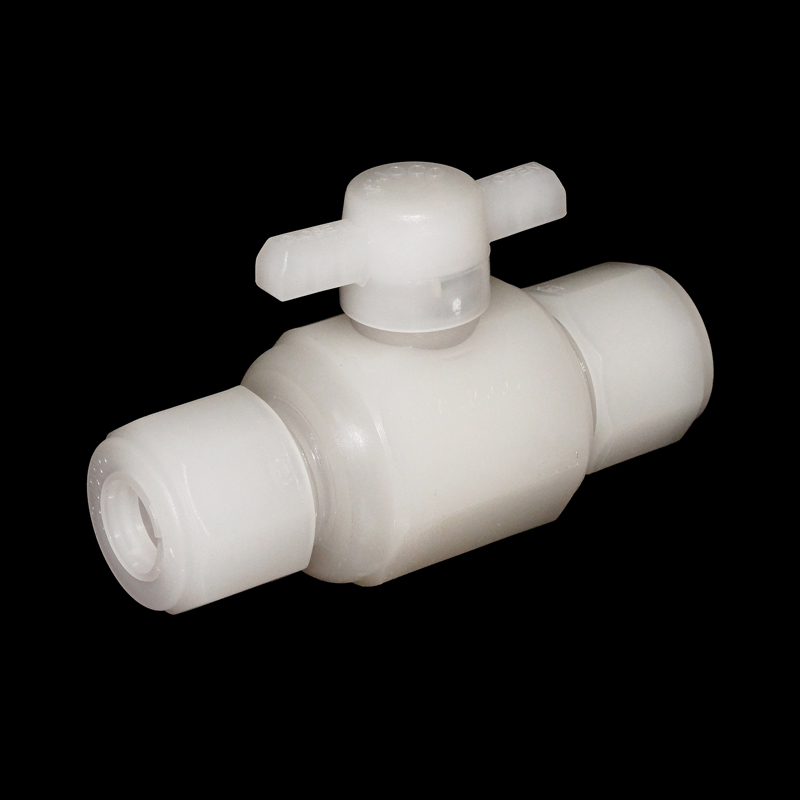
You must always match the polymer to the specific process. Specifying the wrong plastic leads to rapid system failure. Different resins handle heat and chemicals uniquely. Let us review the most common industrial variants.
UPVC and CPVC handle baseline industrial tasks exceptionally well. These Polyvinyl Chloride variants are ubiquitous across global plants. UPVC works best for municipal water treatment, cold waste acids, and standard fluid routing. It handles standard industrial plumbing efficiently and economically. CPVC offers enhanced thermal limits through an added chlorination process. It handles higher temperatures safely, up to roughly 200°F. However, both materials share strict operational limitations. You must never use them for compressed air. Volatile solvents and aromatics will degrade their structure quickly.
A PPH ball valve steps up to much tougher mechanical challenges. Polypropylene Homopolymer provides excellent fatigue resistance for frequently cycled lines. It thrives in highly corrosive environments. We strongly recommend it for mixed acids and strong alkalis. It also excels in demanding outdoor applications. It features superior UV stability and thermal shock resistance compared to standard PVC.
For extreme manufacturing environments, you need advanced fluoropolymers. A PVDF resin represents the ultimate engineered solution. Polyvinylidene Fluoride handles severe chemical punishment without structural degradation. It is the premier chemical fluid control valve available today. It handles high concentrations of sulfuric acid easily. It aggressively repels halogens like chlorine and bromine. It operates safely at elevated temperatures up to 280°F. You must consider the higher upfront material cost. We justify this investment only in severe applications. Lesser plastics would fail rapidly under these extreme conditions.
Here is a simplified compatibility chart to guide your initial selection:
Material | Max Temperature Limit | Best Applications | Key Limitations |
|---|---|---|---|
UPVC | 140°F (60°C) | Water treatment, cold acids, basic plumbing | Not for volatile solvents or compressed gases |
CPVC | 200°F (93°C) | Hot water lines, corrosive chemical distribution | Cannot handle aromatics or compressed air |
PPH | 180°F (82°C) | Mixed acids, alkalis, outdoor UV exposure | Vulnerable to highly concentrated oxidizers |
PVDF | 280°F (138°C) | Concentrated sulfuric acid, halogens, ultra-pure water | Highest material cost, requires specialized welding |
Demonstrating objective engineering expertise means acknowledging material limits. Plastics cannot replace metal in every single scenario. You must recognize exactly when to stick with traditional materials to ensure facility safety.
Vulnerability to fluid hammer remains a critical design concern. Sudden pressure spikes happen during rapid valve shutoffs. This water hammer creates massive kinetic shockwaves that travel down the pipeline at the speed of sound. These intense pressure spikes can easily shatter rigid thermoplastics. Metal valves possess inherent structural ductility. Bronze and forged steel absorb these shockwaves safely. They deform slightly instead of cracking outright. You should avoid plastics entirely in lines prone to severe surging.
Extreme temperatures and live steam demand metal bodies. Plastics rapidly lose their structural integrity and pressure-handling capabilities as temperatures rise. This phenomenon is known as the thermal derating curve. A polymer rated for 150 psi at room temperature might only handle 30 psi at 200°F. Systems involving live steam strictly require metal housings. Any process exceeding 300°F automatically rules out thermoplastic housings.
High-pressure environments also exceed standard polymer capabilities. Standard plastic valves usually max out at 150 psi or 230 psi. This rating applies strictly at ambient temperatures. Many industrial hydraulics and compressed gas lines demand thousands of psi. These intense applications necessitate robust, thick-walled metal housings.
Consider these best practices and common mistakes when designing your system:
Best Practice: Always consult detailed chemical resistance charts for your specific operating temperature. Chemicals behave much more aggressively when heated.
Best Practice: Install pressure relief mechanisms or water hammer arrestors near polymer valves to mitigate kinetic shock.
Common Mistake: Using PVC piping for compressed air lines. When it ruptures under gas pressure, it creates a severe shrapnel hazard.
Common Mistake: Ignoring thermal expansion coefficients. Plastics expand significantly more than metals. You must design your pipe supports and expansion loops accordingly.
Procuring the correct fluid components demands careful, systematic engineering. Use this implementation checklist to guide your purchasing decisions effectively.
Select the Right End Connections: True union connections work best for highly corrosive lines. They feature threaded collars on both ends of the housing. You can remove the main body for maintenance without ever cutting the pipe. Flanged connections suit larger pipe diameters perfectly. They integrate into existing metal piping systems safely and securely. Socket or threaded ends provide a cost-effective choice. We use them primarily for smaller, permanent, or low-pressure agricultural lines.
Ensure Actuation Compatibility: Modern process automation requires reliable pneumatic or electric actuators. Ensure the selected valve structure handles the actuator torque safely. Weak plastic stems will snap under automated turning forces. You need specific integrally molded mounting pads built directly into the housing.
Verify Compliance and Safety: Check that your chosen components meet relevant industry standards. Look for exact ANSI/ASME dimensional alignments. Require strict NSF certifications for any potable water applications. Follow specific chemical handling guidelines dictated by your local environmental regulations.
Demand Comprehensive Documentation: Always request factory material test reports before purchasing. Ensure the manufacturer provides clear thermal derating curves for their specific polymer blends.
Transitioning away from legacy metals yields incredible facility benefits. Plastic ball valves are not just a cheaper alternative to metal. They represent a vastly superior engineering choice for specific corrosive environments. You must simply respect their distinct temperature and pressure limits.
Base your final procurement decisions on hard operational data. Perform a strict cross-reference of the chemical MSDS against the polymer. Verify the maximum system operating temperature. Document the absolute peak pressure limits. This careful logic prevents catastrophic misapplications and ensures long-term safety.
We strongly recommend a cautious deployment strategy for new facilities. Consult comprehensive chemical compatibility charts for specific polymers. Compare PVC, PPH, and PVDF directly against your aggressive process media. Request physical material test samples before attempting a full-scale facility rollout.
A: Yes, they often outlast metal significantly in highly corrosive environments. Facilities handling saltwater or acid processing see massive longevity gains. Plastics cannot rust. They never suffer from galvanic corrosion. They will deliver decades of reliable service provided you operate them strictly within their rated temperature and pressure limits.
A: Yes, but exact material selection remains critical. You typically require a PVDF or PPH ball valve for high concentrations of sulfuric acid or chlorine. These advanced polymers handle aggressive oxidizers safely. Standard PVC may degrade, swell, or become dangerously brittle under the same severe chemical exposure.
A: True union valves feature threaded collars on both ends. These collars allow you to detach the central valve body easily from the active pipeline. You can perform maintenance, cleaning, or complete replacements highly efficiently. You never need to dismantle or cut the surrounding pipe system to service the unit.


