
close
Choose Your Site
Global
Social Media


Views: 0 Author: Site Editor Publish Time: 2025-08-14 Origin: Site


When considering materials for hot water circulation systems, one common question arises: can PPH pipe handle hot water effectively? The short answer is yes, with some important temperature and pressure caveats. PPH pipe is increasingly used in HVAC and industrial hot water systems due to its chemical resistance, mechanical strength, and thermal tolerance. However, understanding its thermal limits and design considerations is crucial to ensuring reliable performance in hot water applications. At VSJOCO Zixing Yuguang Pipeline System Co., Ltd., we provide high quality PPH pipes tailored for such demanding environments.
Polypropylene Homopolymer (PPH) pipes are known for their durability and chemical resistance, but temperature is a critical factor in their application. Generally, PPH pipe products are rated for continuous service at temperatures up to approximately 90–100°C. Exceeding this range may lead to accelerated material degradation or deformation. It's essential to note that these ratings are dependent on the specific product grade and manufacturer specifications.
The interaction between pressure and temperature is vital: as the temperature rises, the maximum allowable pressure decreases significantly. For example, at ambient temperature (around 20°C), PPH pipes can withstand relatively high pressures, often exceeding many typical HVAC demands. However, at temperatures nearing 100°C, allowable pressures may reduce by 30–50%, depending on pipe thickness and material grade. This underscores the importance of consulting vendor datasheets and engineering charts before system design.
Short-term temperature spikes above 100°C might be tolerated but should never become standard operating conditions. Continuous exposure at or above the upper temperature limits can cause creep deformation, reducing mechanical strength and potentially leading to failure over time.
PPH pipes demonstrate a higher coefficient of thermal expansion compared to metals. This means that hot water systems using PPH will experience noticeable pipe elongation and bending as temperatures rise. For instance, a 10-meter run of PPH pipe could expand by several centimeters when heated from room temperature to 90°C.
Such expansion, if unaccounted for, can exert stress on pipe joints and supports, resulting in premature wear or leaks. Therefore, system designers must include expansion loops, flexible connectors, or allow sufficient spacing between pipe hangers to accommodate this movement. Properly planned hangers with slide supports prevent rigid constraints and reduce mechanical stress.
Additionally, thermal cycling—repeated heating and cooling—can accelerate fatigue in the piping system, so material selection and installation methods should consider expected operating cycles.
Flow velocity directly impacts system noise and pipe longevity. For hot water circulation, velocities above recommended thresholds (usually 3 m/s) can cause turbulence, leading to erosion of the pipe interior and noise generation. Excessive flow can also strain pumps and valves, increasing maintenance frequency.
Designers should calculate expected flow rates and select pipe diameters that maintain velocity within optimal limits. It's a balance between minimizing friction losses and avoiding oversized pipes that add unnecessary cost and space requirements.
In addition, consideration for water quality—such as suspended solids or chemical additives—is important. Abrasive or chemically aggressive fluids increase erosion risk, necessitating conservative velocity limits or alternative materials.
Effective insulation on PPH pipes reduces heat loss, preserving water temperature and improving energy efficiency. Insulation materials compatible with plastic pipes and rated for the system’s temperature range should be selected to avoid degradation over time.
Loop layouts influence temperature distribution. Shorter loops reduce temperature drop and improve system responsiveness. Placement of pumps near heat sources or consumption points helps maintain flow and temperature stability.
Pumps must be carefully selected not only for flow and pressure but also for their ability to handle hot fluids without degradation. Pumps with stainless steel or suitable plastic wetted parts complement PPH piping systems well.
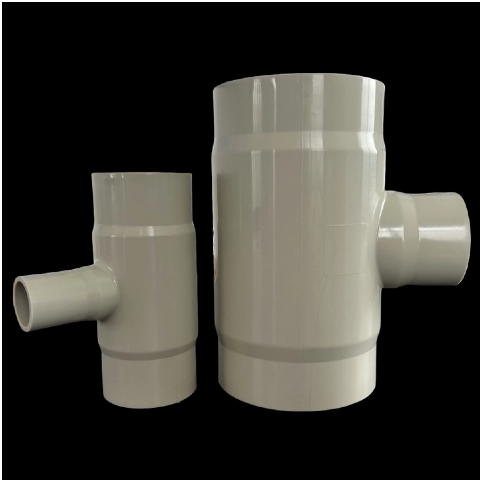
Heat fusion welding remains the preferred method for joining PPH pipes in hot water systems, ensuring leak-proof, homogenous joints. Proper training and equipment calibration are essential for consistent weld quality.
Installers should ensure pipes are clean, properly aligned, and supported during welding. Post-weld cooling must be controlled to avoid residual stresses.
Expansion accommodation is critical—installing expansion joints, loop bends, or flexible couplings minimizes stress on welds and connections. Avoid rigid anchoring, which can cause cracking or deformation during thermal cycling.
Long-term exposure above the recommended maximum temperature degrades polymer chains, reducing mechanical strength and resistance to creep. It's essential to maintain operating temperatures within the specified range.
Pressure testing should mimic actual service conditions, considering temperature derating factors. Hot pressure tests require lower pressures or shorter durations to prevent damage. Adhering to vendor-recommended pressure testing protocols protects system integrity.
Creep deformation, the gradual change in shape under prolonged stress at elevated temperatures, is a known risk in PPH piping systems. Scheduled inspections should include visual checks for bulges, discoloration, and joint integrity.
Non-destructive testing methods such as ultrasound or thermal imaging can detect early-stage damage without system shutdown. Typical inspection intervals range from six months to annually, depending on system criticality and operating conditions.
Proactive maintenance extends system life and prevents unexpected failures.
Choosing between metal and PPH pipes for hot water systems requires balancing temperature and pressure demands against cost, corrosion resistance, and installation factors.
Metal pipes excel in high-temperature, high-pressure environments with minimal thermal expansion but are vulnerable to corrosion and generally heavier, increasing installation complexity and cost.
PPH pipes offer excellent chemical resistance, ease of installation due to lighter weight, and lower maintenance costs. Their thermal expansion and temperature limits must be accounted for but suit many industrial and commercial hot water applications where corrosive fluids or chemical additives are present.
Maximum temperature: Typically 90–100°C continuous service; confirm with vendor datasheet.
Pressure class: Varies with temperature and pipe dimension; always verify product specifications.
Insulation: Recommended to minimize heat loss and personnel hazards.
Compatibility: Ideal for chemically aggressive fluids and hot water recirculation loops.
Thermal expansion: Design allowances for expansion and contraction essential.
Jointing: Heat fusion welding preferred; allow for stress relief.
Inspection: Regular creep monitoring and maintenance recommended.
VSJOCO Zixing Yuguang Pipeline System Co., Ltd. proudly offers reliable PPH pipe solutions engineered specifically for hot water circulation systems. Understanding PPH pipe’s thermal properties and adhering to best design and installation practices ensures durable, efficient, and safe operation even under challenging temperature conditions. Our high temperature PPH pipe products provide an excellent balance of corrosion resistance, mechanical strength, and cost-effectiveness for a wide range of HVAC and industrial applications. For detailed technical support, product datasheets, or system consultation, please contact us to explore how our products can meet your project requirements.


